From Followers to Thinkers: Why Great Leaders Grow Minds, Not Just Manage People


Every leader wants a team that performs — but performance without thinking is fragile.
When people simply follow instructions, they stop learning. They stop questioning. And when challenges shift, they freeze, waiting for someone else to decide.
That’s the hidden cost of the command and control style of leadership — the model many of us were taught to admire.
It delivers quick results in the short term. But in the long run, it breeds dependency, fear, and stagnation.
The Trap of Command and Control
Traditional leadership is built on authority. The leader gives orders. The team executes. It feels efficient, even comforting — one person steering the ship, everyone else rowing in rhythm.
But when the world changes (as it always does), that model starts to crack. Teams raised on direction struggle when the leader isn’t there to provide it. Initiative shrinks. Creativity disappears.
People learn to play it safe. They focus on doing what’s expected rather than thinking about what’s possible.
And slowly, the organisation loses its ability to adapt.
Command and control might keep things running smoothly — but it also keeps minds small.
Why Thinking Matters More Than Following
In today’s environment, thinking is the real competitive advantage.
Technology evolves. Markets shift. Roles transform. But one constant remains: the need for people who can think independently, solve problems creatively, and take ownership of outcomes.
A “thinker” in a team doesn’t just complete tasks — they challenge assumptions, connect dots, and spot opportunities others miss.
They’re proactive, not reactive. They make the leader’s job easier, not heavier.
Building thinkers isn’t about replacing structure with chaos. It’s about replacing control with curiosity.
Enter the Coaching Style of Leadership
Coaching-led leadership is the opposite of command and control. It doesn’t remove authority — it redefines it.
Instead of telling people what to do, coaching leaders help people discover how to do it themselves. They guide reflection. They ask questions. They create space for exploration.
Here’s what that looks like in practice:
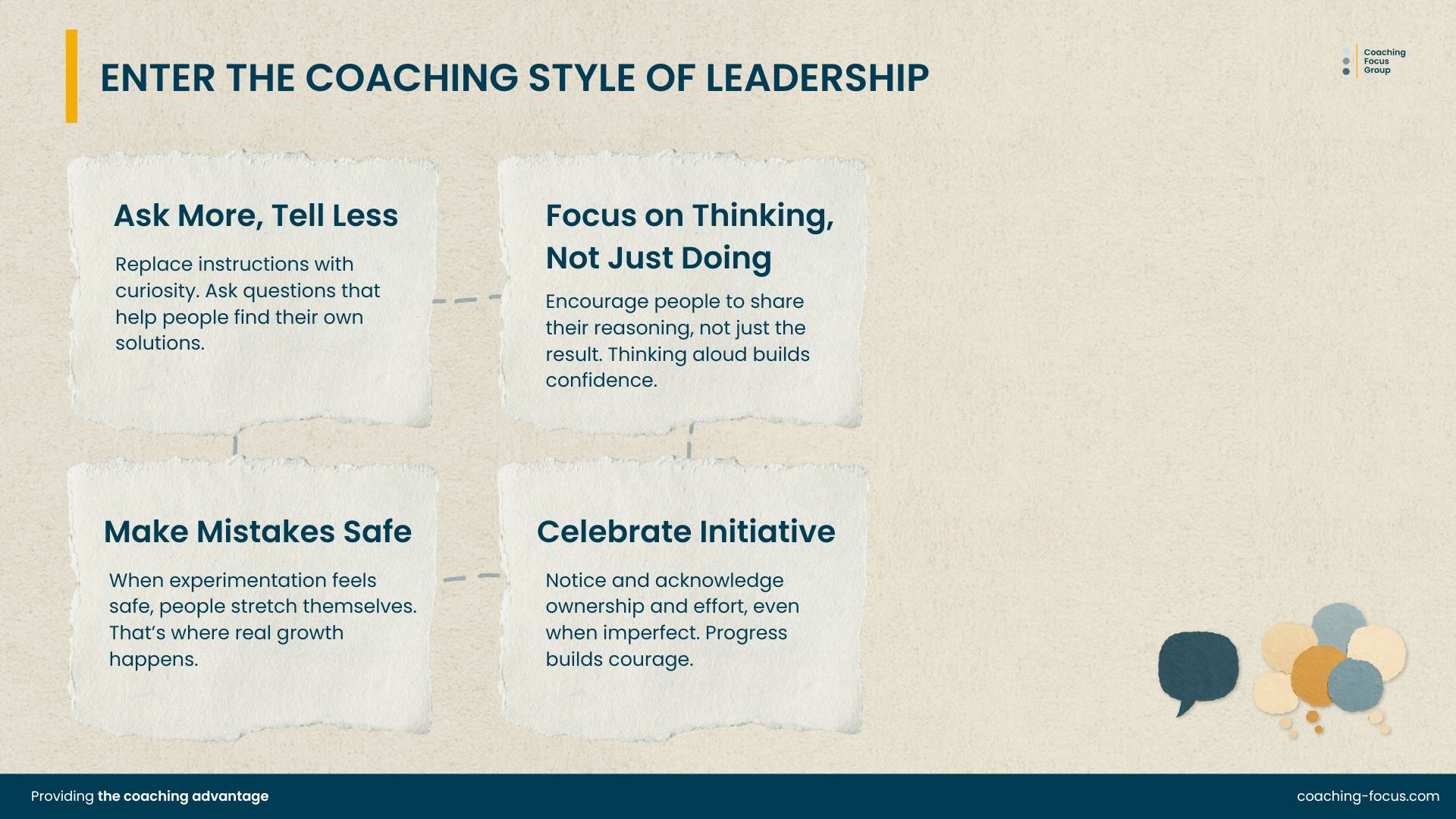
- Ask more, tell less.
Instead of saying, “Here’s what you need to do,” try, “What options do you see?” or “What do you think might work best?” - Focus on thinking, not just doing.
Encourage team members to share their reasoning, not just their results. Thinking aloud builds confidence and deepens understanding. - Make mistakes safe.
When people know it’s okay to experiment, they start to stretch themselves. That’s where growth happens. - Celebrate initiative.
Recognise when someone takes ownership or tries a new approach — even if it’s not perfect. Progress builds courage.
The shift from command to coaching takes patience, but the payoff is huge: self-sufficient, confident team players who can think, adapt, and lead in their own right.
Building Thinkers, Not Followers - Webinar
Join us for our webinar “Building Thinkers, Not Followers” on 22 January 2026.
If you’re reading this after the event, you can watch the replay anytime for £5.99.
.jpg)
Find out more here > Webinars
Confidence: The Quiet Outcome
When leaders coach instead of control, something powerful happens beneath the surface.
People stop second-guessing themselves. They start trusting their judgement.
Confidence isn’t built through instruction — it’s built through discovery.
Every time you give someone the space to think, you reinforce the belief that they can.
And over time, that belief turns followers into problem-solvers.
The Bottom Line
Command and control creates followers.
Coaching creates thinkers.
If you want a team that’s resilient, engaged, and ready for anything, focus less on giving answers and more on asking better questions.
Because the future of leadership isn’t about having all the solutions — it’s about helping others find theirs.
FAQs About Growing Thinkers Through Coaching Leadership
1. Why is command and control no longer effective?
Because it teaches people to follow instead of think. It creates dependency and limits creativity, which makes teams fragile when challenges change.
2. What makes a coaching style of leadership more effective?
Coaching helps people discover their own solutions. It builds confidence, ownership, and deeper thinking so the team becomes more self-sufficient.
3. How do leaders encourage thinking instead of following?
Ask open questions, explore options together, and make it safe for people to experiment and share their reasoning.
4. What is the biggest outcome of growing thinkers?
Confidence. When people learn to trust their own judgement, they take initiative and contribute at a higher level.
Summary: From Followers to Thinkers: Why Great Leaders Grow Minds, Not Just Manage People
This article explores why command and control leadership creates dependence, while coaching grows confident, capable thinkers. It shows how shifting from telling to asking builds initiative, creativity, and resilience across a team. The key insight is simple: great leaders focus less on giving answers and more on developing the minds around them. That shift creates teams that can think, adapt, and lead in their own right.

Trayton Vance
Trayton Vance is the Founder and Managing Director of Coaching Focus Group, one of the UK’s leading leadership coaching consultancies working with clients such as McDonalds, Beats by Dre, Paramount and many more.
Coaching Focus Group
Specialists in leadership coaching, workplace coaching programmes, and building coaching cultures that stick.


You might be interested in...


Employee Engagement Series