


Beyond Performance: Building the Capability That Sustains Future Success
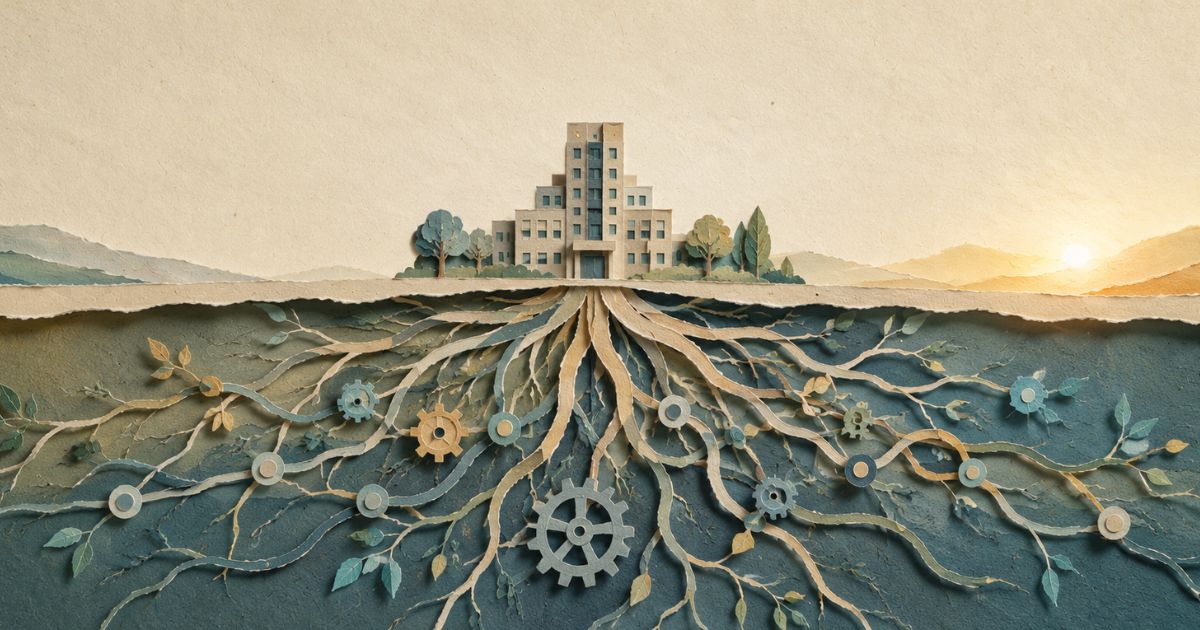
Every organisation measures performance.
Revenue, profit, productivity, customer satisfaction, quality, efficiency and delivery are all essential indicators of organisational success. They tell us how well an organisation is performing today.
Yet performance alone tells only half the story.
The organisations that continue to succeed over time recognise that today’s results are largely the product of yesterday’s investment in people, leadership and organisational capability. Equally, tomorrow’s performance will depend upon the decisions leaders make today.
The challenge for every organisation is therefore not simply to achieve performance, but to sustain it.
This requires a shift in thinking. Rather than asking only “How do we improve performance?” organisations should also be asking whether they are increasing their capability, whether their people are becoming better equipped to deal with future challenges, whether they are developing leaders who create more capable teams, and whether they are leaving the organisation stronger than they found it.
Performance is an outcome. Capability is the engine that produces it.
What Does “Beyond Performance” Mean?
“Beyond performance” refers to the recognition that achieving today’s results is necessary but insufficient for long-term organisational success, and that leaders must simultaneously build the underlying capability that will sustain future performance.
Organisations that focus only on today’s results often create short-term success at the expense of long-term sustainability. Pressure to deliver can unintentionally encourage leaders to solve problems themselves, provide answers rather than develop thinking, direct rather than empower, and prioritise immediate outputs over lasting capability.
The consequence is predictable. Teams become increasingly dependent on their leaders. Innovation slows. Ownership reduces. Future leadership pipelines weaken. Performance becomes harder and more expensive to sustain.
This is not a failure of effort. It is a failure of model. The most effective organisations understand that every interaction between a leader and their people is an opportunity to do two things simultaneously: deliver today’s results, and increase tomorrow’s capability.
Why Does Performance Alone Create a Ceiling?
Performance-focused leadership creates a ceiling because it treats results as the product of the leader’s own expertise rather than the product of the organisation’s collective capability, making performance dependent on the individual rather than the system.
Gallup’s research found that managers account for at least 70% of the variance in employee engagement scores across business units. The manager, not the programme, is the single most significant factor in whether people perform. Yet most leadership investment goes into programmes, frameworks and competencies, not into equipping every manager to build capability through the way they lead.
When leaders solve problems for their teams, two things happen. The immediate problem is resolved, and the team’s capacity to solve that problem in future is slightly diminished. Over time, this compounds. Teams that could be developing independent thinking, judgement and ownership instead learn to wait for direction. The leader becomes busier. The team becomes less capable. Performance is achieved, but at the cost of the very capability that would sustain it.
Research from Jones, Woods and Guillaume’s 2016 meta-analysis of workplace coaching found that coaching had a significantly greater impact on skill development and performance when conducted by internal coaches rather than external providers. The implication is clear: capability builds most effectively when it is embedded in everyday leadership, not when it is delivered as an external intervention.
The tendency to advise rather than coach is the most common mechanism through which this ceiling is created. Leaders who pride themselves on having the answer are, often unintentionally, reducing the capability of the people around them.
What Is Coaching-Led Leadership™?
Coaching-Led Leadership™ is an approach in which leaders recognise that their responsibility extends beyond achieving objectives and are equally accountable for developing the capability of the individuals, teams and organisation they lead.
A Coaching-Led Leader does not abandon performance. They pursue it through a fundamentally different mechanism. Instead of providing solutions, they develop problem-solving capability. Instead of driving compliance, they build ownership. Instead of creating dependence, they develop confidence, judgement and accountability. Instead of being the source of every answer, they become the catalyst for better thinking.
Every conversation therefore has two outcomes. The first is progress towards the task. The second is growth in the capability of the person. This is the essence of the leader as coach: not a qualification, not a title, but a habitual way of leading that treats every interaction as a development opportunity.
Google’s Project Oxygen, the company’s data-driven analysis of what makes managers effective, identified “is a good coach” as the single most important behaviour distinguishing high-performing managers from low-performing ones. Not technical expertise. Not decision-making speed. Coaching behaviour. The research found that teams led by coaching-focused managers performed better, retained more effectively and reported higher engagement.
This is not about turning every leader into a professional coach. It is about developing leaders as Capability Builders who know when to direct, when to support, when to challenge, when to facilitate thinking and when to create ownership. Coaching as an everyday conversation is the mechanism through which capability is built, not as a separate activity, but as the way leadership happens.
1. Did we make progress on the task?
2. Did the person become more capable as a result of this conversation?
If you can only answer the first question with confidence, you are delivering performance. If you can answer both, you are building capability. The gap between those two answers is where the work of becoming a Coaching-Led Leader™ begins.
How Does Building Capability Change the Organisation?
Building capability changes the organisation by shifting leadership from managing performance to creating the conditions in which performance is continually regenerated through the growing capability of people.
Over time, this fundamentally changes how the organisation operates. Individuals become more self-aware and self-sufficient. Teams collaborate more effectively. Managers spend less time firefighting and more time creating value. Leaders become multipliers of capability rather than controllers of activity.
The organisation becomes increasingly resilient, adaptable and able to respond to change because capability is continually growing alongside performance. When a new challenge arrives, the response does not depend on the expertise of a single leader. It depends on the collective thinking, judgement and ownership of people who have been developed to meet it.
This is why coaching culture alone is not enough. Coaching as a programme builds coaching skill. Coaching as a leadership habit builds organisational capability. The distinction matters because it determines whether the investment is sustainable or whether it will plateau when the programme ends.
The ICF and Human Capital Institute found that 51% of organisations with strong coaching cultures reported revenue growth above their industry peers, compared to 38% of organisations without. But the research also showed that the strongest results came from organisations where coaching was embedded in everyday leadership behaviour, not confined to formal coaching programmes.
Why Does This Matter More Now Than Ever?
This matters more now than ever because the pace of technological change, the reshaping of work by artificial intelligence and the accelerating obsolescence of skills mean that competitive advantage increasingly depends on organisational capability rather than existing knowledge.
The World Economic Forum’s Future of Jobs Report 2025 estimates that 39% of workers’ core skills will change by 2030. IBM research suggests that skills have a half-life of approximately five years, with technical skills becoming obsolete in as little as two and a half years.
DDI’s Global Leadership Forecast 2025 found that 83% of HR leaders report a growing demand for new leadership skills, yet development lags behind. Only 40% of leaders rate their organisation’s leadership quality as high, a 17% drop from two years prior. Only 20% of HR leaders say they have successors ready for critical roles.
McKinsey’s State of Organisations 2023 research found that 78% of leaders said capability building was very or extremely important to their organisation’s long-term growth, yet only 18% reported using structured, objective approaches to building it. There is a clear and widening gap between what organisations know they need and what they are actually building.
In this environment, competitive advantage no longer comes from what an organisation knows today. It comes from how quickly its people can learn, adapt, innovate and apply new thinking. That is capability. The future of leadership development is not about delivering more training. It is about building the conditions in which capability grows continuously through the work itself.
How Do Organisations Move Beyond Performance?
Organisations move beyond performance by shifting their leadership model from one that delivers results through direction to one that delivers results through the deliberate development of people’s capability to produce those results independently.
Equip every leader, not just a cohort. Coaching skills must move from optional development to core leadership expectation. The skills of inquiry, active listening and developmental conversation are not an add-on to the leadership curriculum. They are the curriculum. Great leaders grow minds, not just manage people, and that requires a fundamentally different set of skills than directive management.
Set clear expectations and measure what matters. Define what a good leadership conversation looks and sounds like. Measure conversation quality, capability growth and ownership, not just coaching hours logged or programmes completed. Make capability building the expected norm of leadership, not the exception.
Make development happen in the work, not away from it. The one-to-one is not an administrative check-in. The performance conversation is not a retrospective review. The team meeting is not a reporting session. Each is an opportunity to build capability, and leaders who understand this use them that way. Driving performance through coaching is not about adding more to the leader’s workload. It is about changing what the leader does in the conversations they are already having.
None of this happens through a single programme. Leadership training needs a rethink because the traditional model of event-based development cannot produce the sustained behavioural change that capability building requires. The work is harder than running a programme. It is also the only work that produces something that lasts.
Frequently Asked Questions About Performance and Capability
What is the difference between performance and capability in leadership?
Performance measures what has already been achieved: revenue, productivity, customer satisfaction, efficiency. Capability is the underlying capacity that produces those results: the skills, judgement, confidence and adaptability of your people. Performance is an outcome; capability is the engine that creates it. Organisations that measure only performance are looking backwards. Organisations that invest in capability are actively creating the conditions for future success.
What is Coaching-Led Leadership™?
Coaching-Led Leadership™ is an approach in which leaders recognise that their responsibility extends beyond achieving objectives. They are equally accountable for developing the capability of the individuals, teams and organisation they lead. Every leadership conversation has two outcomes: progress towards the task, and growth in the capability of the person. Instead of simply providing solutions, Coaching-Led Leaders develop problem-solving capability. Instead of driving compliance, they build ownership. Instead of creating dependence, they develop confidence, judgement and accountability.
How do you build organisational capability through coaching?
Organisations build capability through coaching by equipping every leader, not just a trained cohort, to lead with a coaching approach. This means shifting from directive management to inquiry-based leadership, making every one-to-one, team meeting and performance conversation an opportunity to develop thinking and build ownership. It requires setting clear expectations for leadership behaviour, measuring conversation quality rather than coaching hours, and embedding development in everyday work rather than treating it as an event separate from the job.
Why is capability building important for future organisational success?
The World Economic Forum estimates that 39% of workers’ core skills will change by 2030. IBM research suggests skills have a half-life of approximately five years, with technical skills becoming obsolete in as little as two and a half years. In this environment, competitive advantage no longer comes from what an organisation knows today. It comes from how quickly its people can learn, adapt, innovate and apply new thinking. Organisations that invest only in performance management are measuring what has already happened. Those that invest in capability are actively creating the conditions for future success.
What happens when leaders focus only on short-term performance?
When leaders focus exclusively on short-term performance, they tend to solve problems themselves, provide answers rather than develop thinking, and direct rather than empower. Over time, teams become increasingly dependent on their leaders. Innovation slows. Ownership reduces. Future leadership pipelines weaken. Performance becomes harder and more expensive to sustain. The organisation achieves results in the short term but becomes less capable of sustaining them in the long term.
How is capability different from training or development?
Training and development are inputs: courses attended, workshops completed, programmes delivered. Capability is the output: the actual skills, judgement, confidence and adaptability that people demonstrate in their work. Traditional development approaches often depend too heavily on formal training, which makes improvement difficult to sustain or scale. Capability building happens through everyday leadership conversations, not just through programmes. It is embedded in the work, not separate from it.
Key Takeaways
1. Gallup found that managers account for at least 70% of the variance in employee engagement, identifying everyday leadership behaviour rather than formal programmes as the highest-leverage factor in organisational performance.
2. The World Economic Forum’s Future of Jobs Report 2025 estimates that 39% of workers’ core skills will change by 2030, making continuous capability building essential rather than optional.
3. DDI’s Global Leadership Forecast 2025 found that 83% of HR leaders report growing demand for new leadership skills, yet only 40% of leaders rate their organisation’s leadership quality as high, a 17% decline in two years.
4. The ICF and Human Capital Institute found that 51% of organisations with strong coaching cultures report above-industry revenue growth, compared to 38% of organisations without, with the strongest results from organisations embedding coaching in everyday leadership.
5. McKinsey’s State of Organisations 2023 research found that 78% of leaders consider capability building very or extremely important to long-term growth, yet only 18% use structured approaches to building it.
6. Jones, Woods and Guillaume’s 2016 meta-analysis found that internal coaching had a significantly greater impact on skill development and performance than external coaching, confirming that capability builds most effectively when embedded in everyday leadership.
7. Google’s Project Oxygen identified “is a good coach” as the single most important behaviour distinguishing high-performing managers, ahead of technical expertise, decision-making and process management.
8. IBM research suggests skills have a half-life of approximately five years, with technical skills becoming obsolete in as little as two and a half years, underscoring the urgency of building adaptive capability rather than relying on existing expertise.
The most successful organisations do both. They deliver performance through people. They build the capability of those people to deliver even greater performance in the future. They move beyond performance. They build capability. And in doing so, they create sustainable organisational success.
Trayton Vance
Trayton Vance is the Founder and Managing Director of Coaching Focus Group, one of the UK’s leading leadership coaching consultancies working with clients such as McDonalds, Beats by Dre, Paramount and many more.
Coaching Focus Group
Specialists in leadership coaching, workplace coaching programmes, and building coaching cultures that stick.


You might be interested in...


Employee Engagement Series


