Why Challenge Is So Important in Coaching to Achieve Performance


Challenge in coaching drives growth by exposing blind spots, building accountability, and pushing people into better performance.
Coaching that avoids challenge is comfortable—but it rarely produces meaningful results. If the goal is real performance improvement, challenge isn’t optional; it’s the engine that drives growth. Strip it out, and coaching becomes a polite conversation that changes very little.
At its core, effective coaching sits in a tension: support on one side, challenge on the other. Too much support without challenge leads to stagnation. Too much challenge without support creates defensiveness or shutdown. But in most real-world coaching? The missing ingredient isn’t support—it’s challenge.
Challenge Creates the Conditions for Growth
People don’t change just because they feel heard. They change when something disrupts how they think or behave.
Challenge does three key things:
- Exposes blind spots – the stuff they genuinely can’t see
- Breaks limiting narratives – the internal stories keeping them stuck
- Forces ownership – shifting from “why this won’t work” to “what I’ll do”
Without challenge, people stay inside their current perspective—and that’s exactly where performance stalls.
The Comfort–Stretch–Panic Model
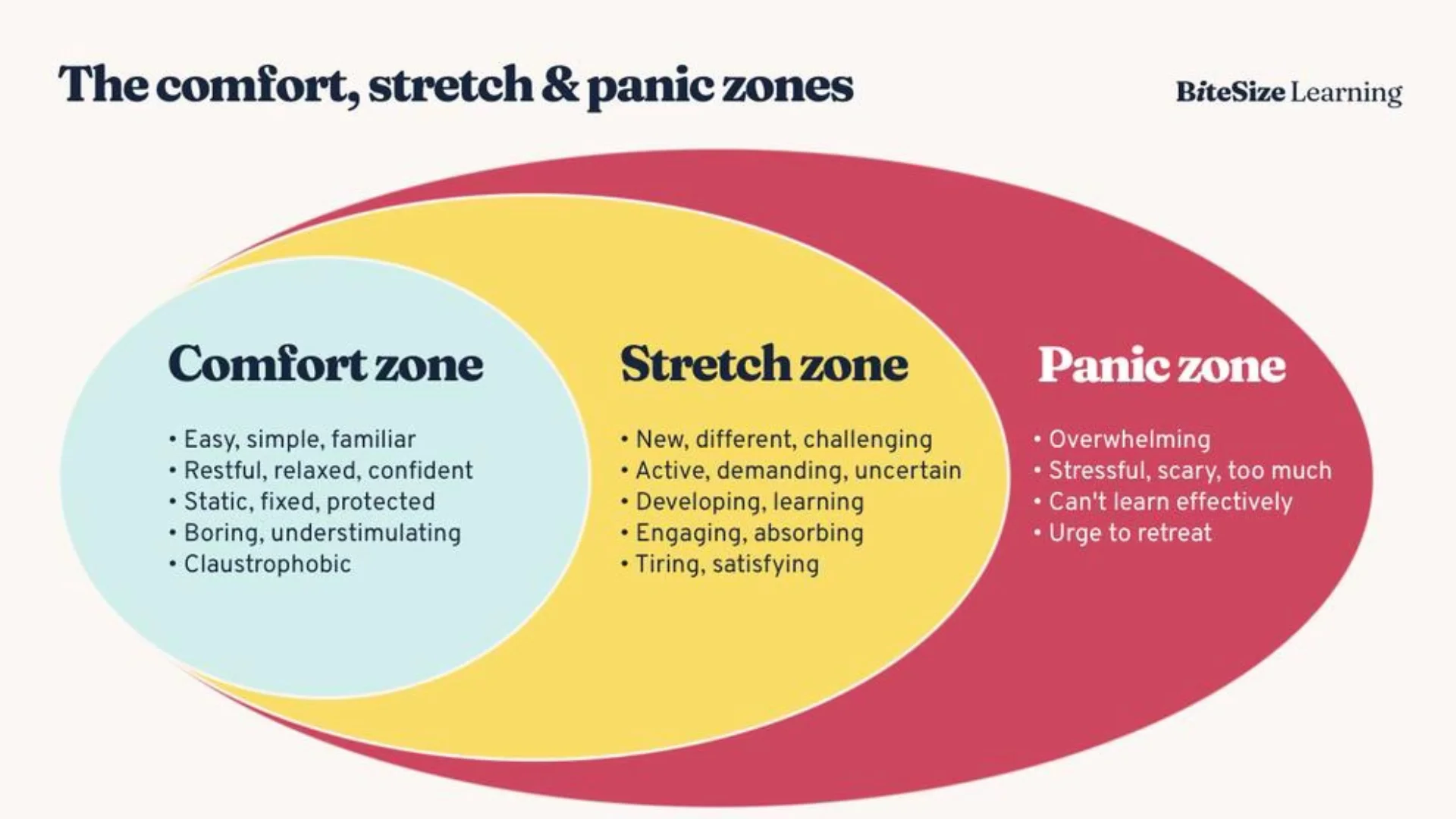
A simple but powerful way to frame challenge:
- Comfort Zone – Safe, familiar, minimal growth
- Stretch Zone – Uncomfortable but manageable; where performance improves
- Panic Zone – Overwhelming; performance drops
The coach’s role is to intentionally move people into the stretch zone.
Most coaches sit too comfortably in the comfort zone because it feels safe. But nothing meaningful happens there. On the other hand, blunt or poorly timed challenge throws people into panic.
The skill isn’t in challenging more—it’s in challenging precisely.
The Support–Challenge Matrix
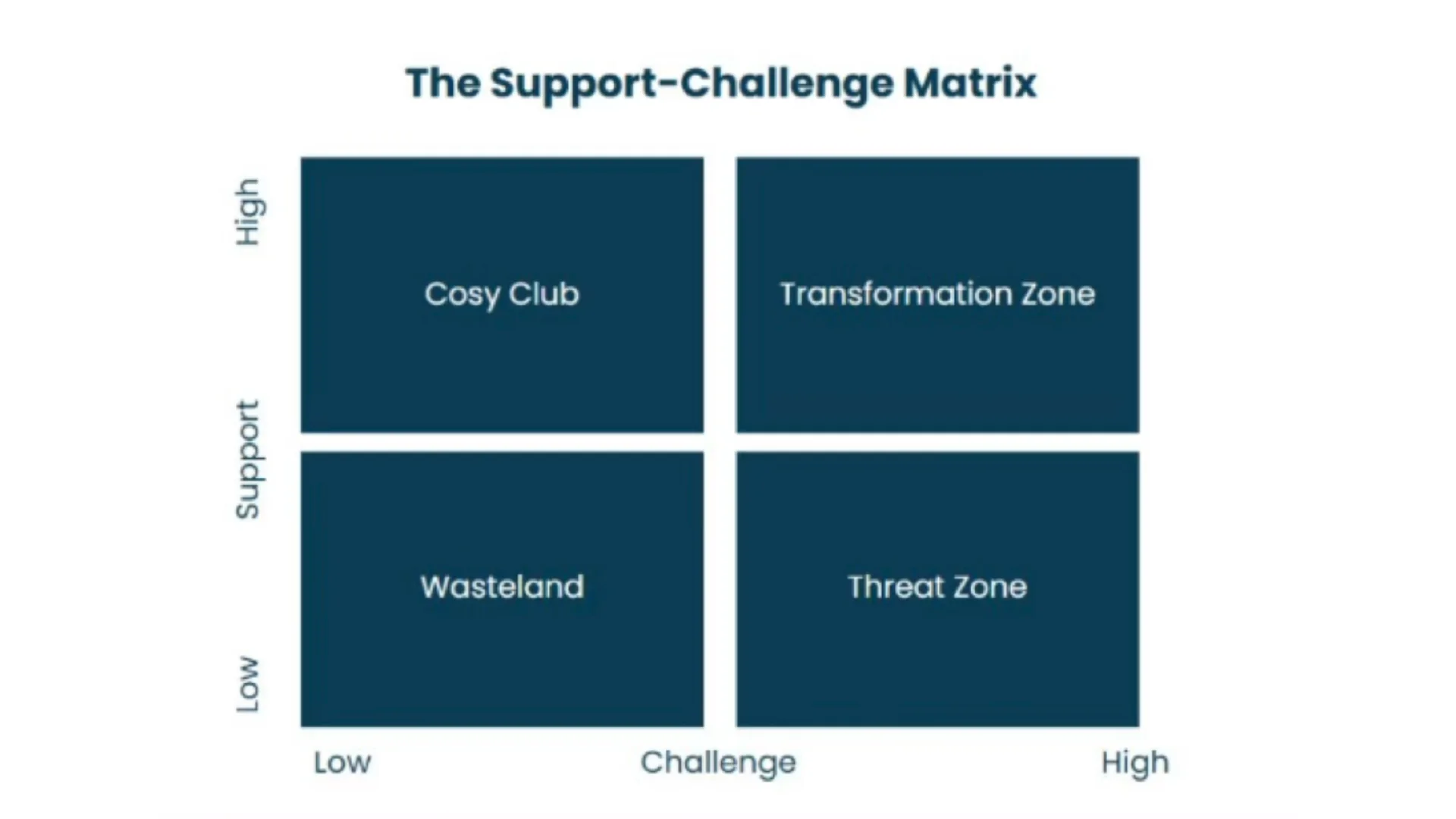
This model makes the balance crystal clear:
| Low Challenge | High Challenge | |
|---|---|---|
| Low Support | Apathy | Stress |
| High Support | Comfort | Growth |
Performance lives in the high support, high challenge quadrant.
Here’s the uncomfortable truth:
Many coaches operate in high support, low challenge because they want to maintain rapport. But that creates comfort—not growth.
If you’re not stretching people, you’re maintaining them.
The Accountability Ladder
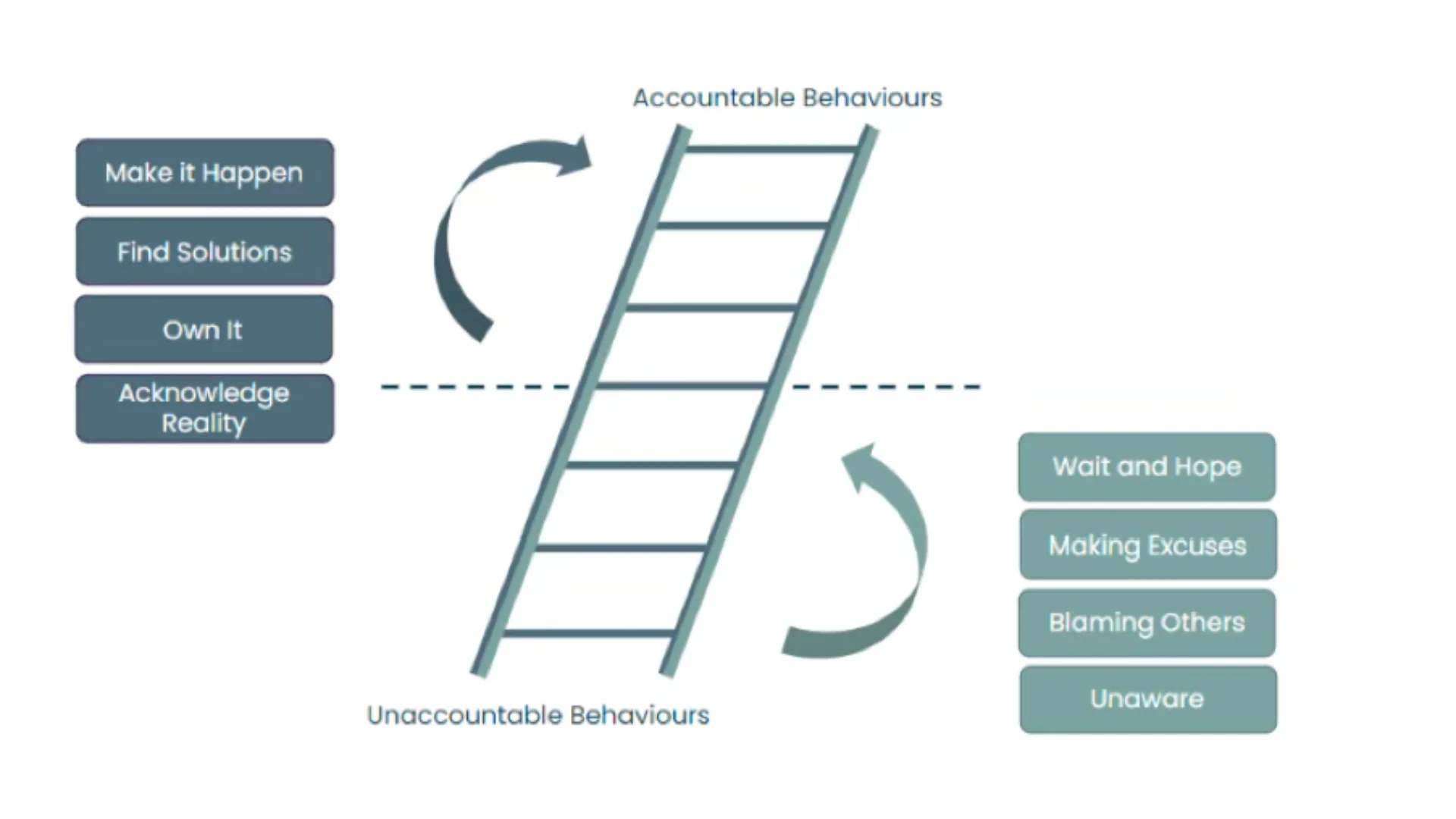
If challenge drives awareness, accountability drives action. The Accountability Ladder shows how people either avoid or own responsibility:
Bottom (Below the Line – Avoidance):
- Denial – “That’s not my fault”
- Blame – “It’s because of them”
- Excuses – “I couldn’t because…”
- Wait & Hope – “Let’s see what happens”
Top (Above the Line – Ownership):
- Acknowledge reality – “Here’s what’s actually happening”
- Take responsibility – “My part in this is…”
- Find solutions – “What can I do?”
- Make it happen – “Here’s what I’ll do next”
Challenge is what moves people up the ladder.
Without challenge, coachees sit comfortably in:
- Blame
- Justification
- Passive thinking
A coach’s job is to interrupt that:
- “What part of this is actually yours?”
- “What are you waiting for?”
- “What would ownership look like here?”
That’s where performance shifts—from talking about problems to doing something about them.
The Ladder of Inference – Challenging Thinking
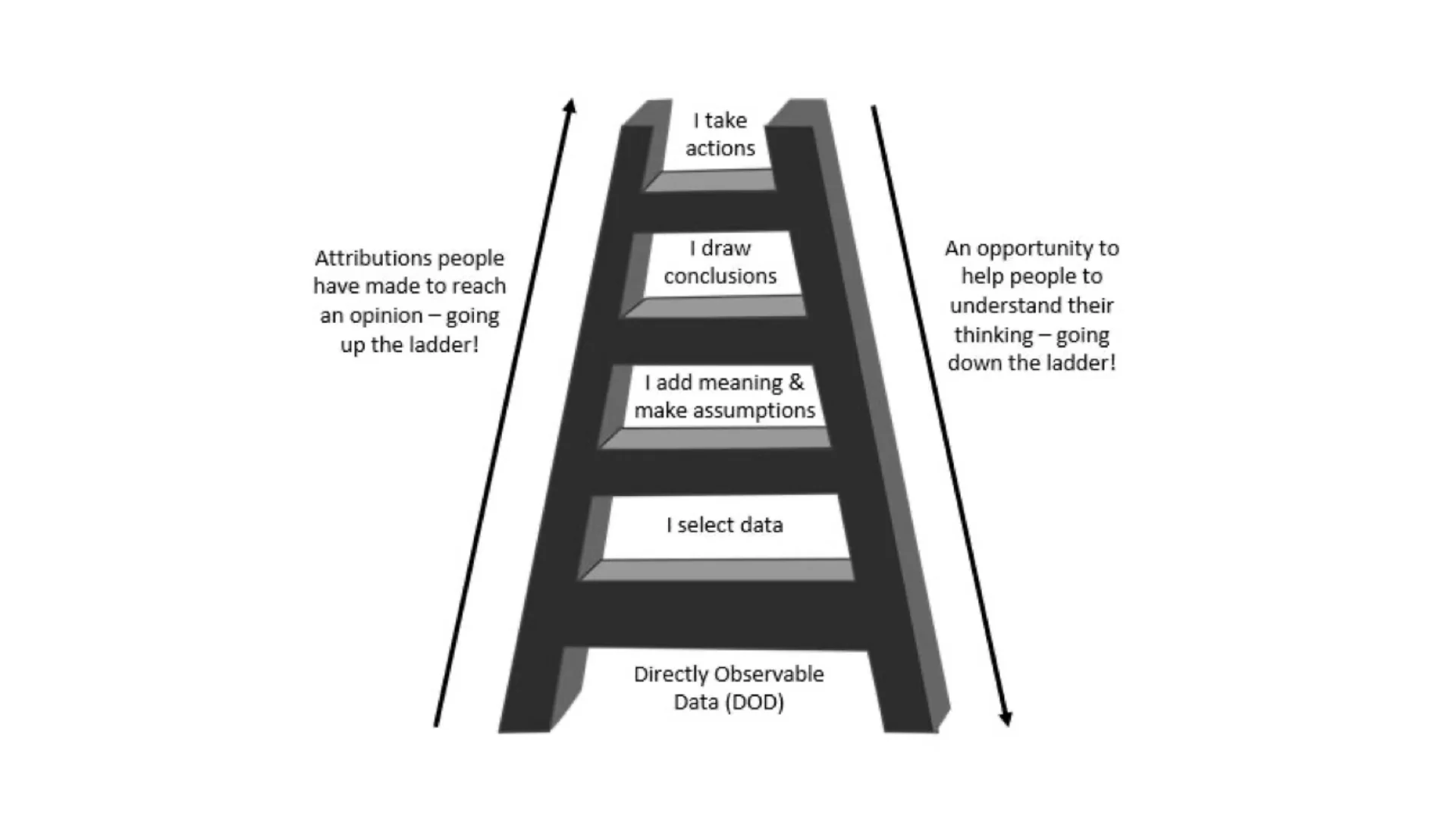
People don’t operate on facts—they operate on interpretations.
The Ladder of Inference explains how quickly we jump from:
- Observations → Assumptions → Conclusions → Beliefs
Challenge here is about slowing that process down:
- “What did you actually see or hear?”
- “What are you assuming?”
- “Could there be another explanation?”
This is powerful because it challenges thinking patterns, not just actions.
And if you don’t change thinking, behaviour won’t stick.
Immunity to Change (Kegan & Lahey)
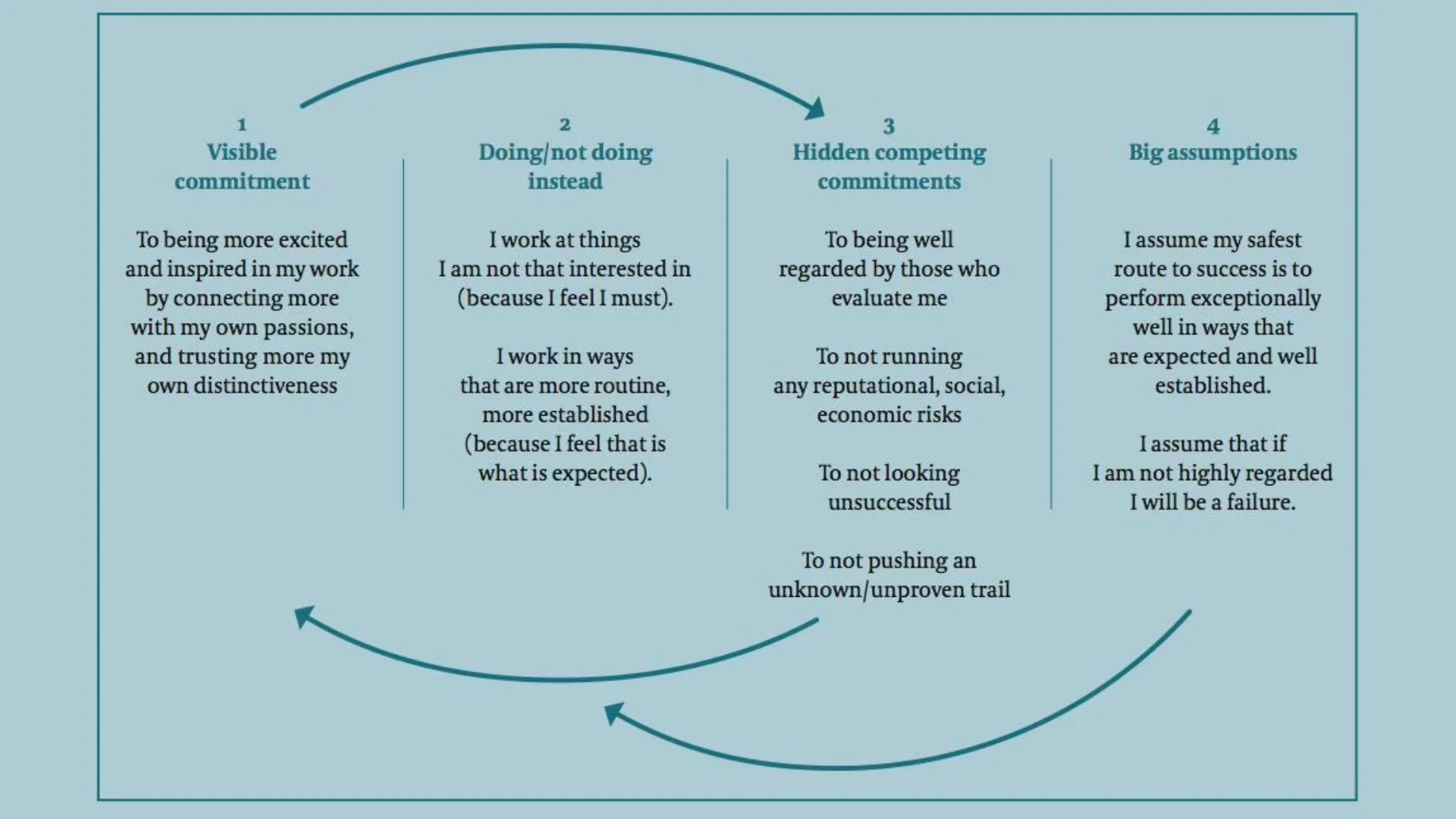
One of the biggest frustrations in coaching:
People say they want to change—but don’t follow through.
The Immunity to Change model explains why.
Behind every visible goal is often a hidden competing commitment.
Example:
- Stated goal: “I want to delegate more”
- Hidden commitment: “I must stay in control to feel competent”
Challenge here means surfacing what’s really going on:
- “What might you be protecting by not changing?”
- “What’s the risk if you actually succeed?”
This is uncomfortable territory—but it’s where real breakthroughs happen.
Surface-level challenge gets surface-level results.
Radical Candor – Direct but Human
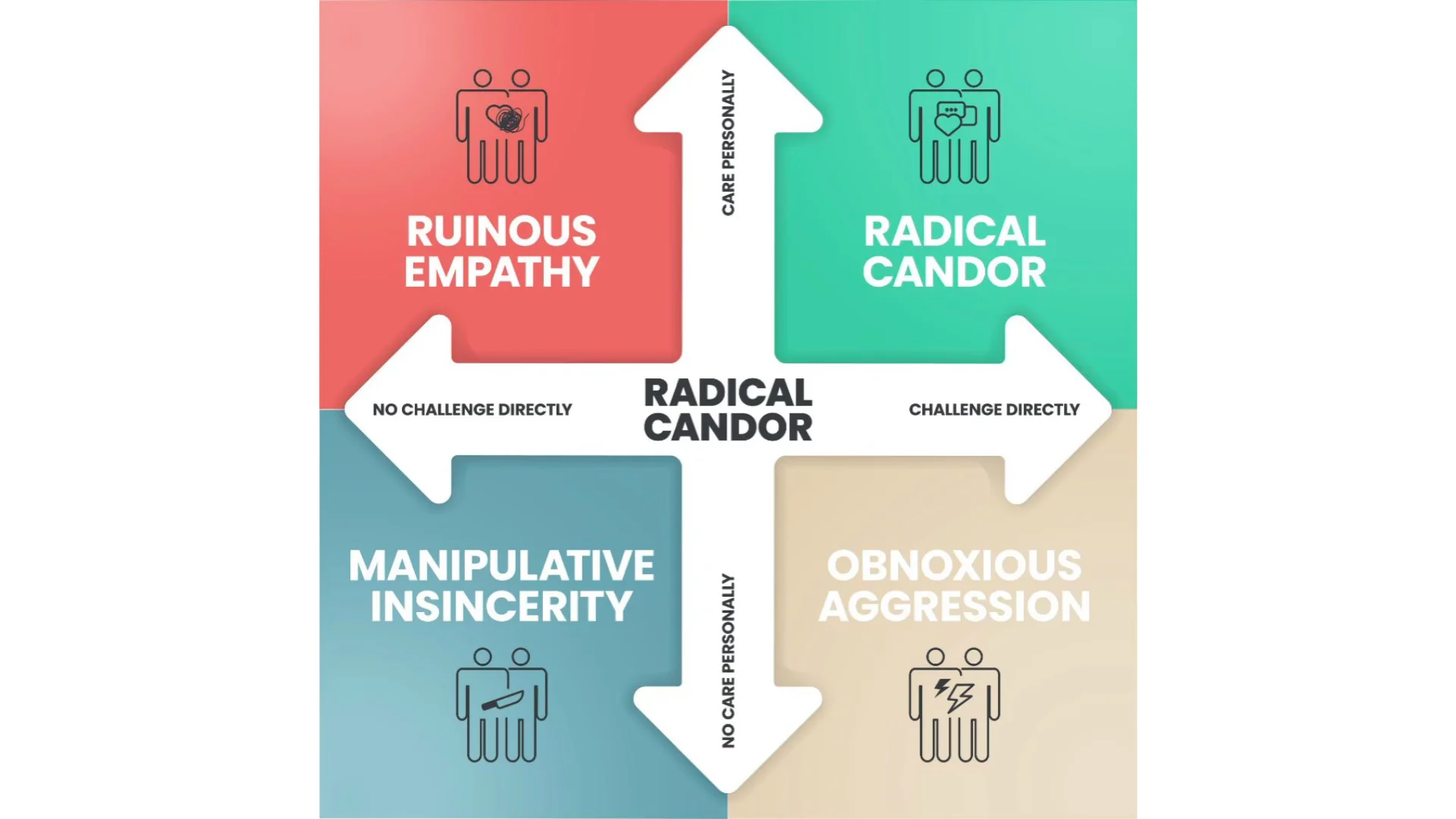
Challenge without care feels like an attack.
Care without challenge feels fake.
Radical Candor sits in the middle:
- Care personally
- Challenge directly
In coaching terms:
- You’re on their side
- But you’re not buying their excuses
Example:
- Soft: “That sounds difficult”
- Challenging: “I think you’re avoiding this—what’s really going on?”
One maintains comfort. The other creates movement.
The Role of Discomfort in Performance
Let’s not dress it up—performance requires discomfort.
Challenge introduces:
- Tension
- Self-reflection
- Pressure to act
And that leads to:
- Better decisions
- Behaviour change
- Real accountability
If every coaching session feels easy, it’s probably ineffective.
Why Coaches Avoid Challenge (and Why It Backfires)
Most coaches under-challenge. Reasons include:
- Wanting to be liked
- Fear of damaging the relationship
- Lack of confidence
- Not knowing how to challenge constructively
But avoiding challenge doesn’t protect the coachee—it keeps them stuck.
Strong coaching relationships aren’t built on comfort. They’re built on:
- Trust
- Honesty
- A shared commitment to improvement
Challenge is part of that deal.
What Effective Challenge Actually Looks Like
Good challenge isn’t aggressive—it’s intentional.
It is:
- Specific – focused on behaviour or thinking
- Timely – addressed in the moment
- Curious – not accusatory
- Grounded – based on reality
Examples:
- “What are you not saying here?”
- “How is that approach working for you?”
- “What’s the real issue underneath that?”
- “If nothing changes, what happens next?”
These questions create productive discomfort—and that’s where growth happens.
Challenge Is an Act of Respect
If you don’t challenge someone, you’re quietly accepting their current level of performance.
And that’s the bit most people miss.
Challenge says:
- “You’re capable of more”
- “I’m not settling for the easy answer”
- “This matters enough to push you”
That’s not harsh—it’s respect.
And in performance coaching, respect isn’t about being nice.
It’s about helping people to be even better.
FAQs About Why Challenge Is So Important in Coaching
1. Why is challenge important in coaching?
Challenge helps people see what they cannot see alone. It breaks unhelpful patterns, builds accountability and creates the discomfort needed for growth.
2. Can too much challenge be harmful?
Yes. If challenge feels overwhelming or harsh, people can become defensive or shut down. Great coaching balances direct challenge with strong support.
3. What does effective challenge look like in a coaching session?
It sounds like thoughtful questions such as, “What are you avoiding?” or “What happens if nothing changes?” Clear, curious challenge creates movement without attack.
4. Why do some coaches avoid challenging people?
Often because they want to be liked, fear damaging rapport or lack confidence. But avoiding challenge usually keeps people stuck exactly where they are.
Summary: Why Challenge Is So Important in Coaching to Achieve Performance
Challenge is the force that turns coaching from a pleasant chat into real progress. Support builds trust, but challenge sparks awareness, ownership and action. The best coaches stretch people without tipping them into panic, helping them confront blind spots, shift thinking and raise performance. If coaching feels too comfortable, growth is likely being left on the table.

Trayton Vance
Trayton Vance is the Founder and Managing Director of Coaching Focus Group, one of the UK’s leading leadership coaching consultancies working with clients such as McDonalds, Beats by Dre, Paramount and many more.
Coaching Focus Group
Specialists in leadership coaching, workplace coaching programmes, and building coaching cultures that stick.


You might be interested in...


Employee Engagement Series