


What Is Feedback and Why It’s Critical for High-Performance Coaching


Feedback (in high-performance coaching)
noun
Information about performance, behaviour, or thinking that reveals gaps, builds self-awareness, and guides improvement. In high-performance coaching, feedback is critical because it drives learning, enables behaviour change, and fuels continuous progress towards better results.
Feedback is one of the most talked-about and most misunderstood tools in coaching.
At its core, feedback is information about performance, behaviour, or thinking that helps someone adjust and improve. It’s not about judgement. It’s not about criticism. It’s about closing the gap between where someone is and where they want to be.
In coaching, feedback is the engine of growth. Without it, progress slows, blind spots remain hidden, and performance plateaus.
But here’s the paradox:
The very thing that drives performance is also the thing most people avoid.
What Feedback Really Means
Feedback is often reduced to “telling someone how they did.” That’s a surface-level view.
A more accurate definition is this:
Feedback is information that increases self-awareness and enables behaviour change.
It can take many forms:
- Reinforcing what’s working (strength-based feedback)
- Highlighting gaps or mistakes (developmental feedback)
- Offering perspective from others (360-degree feedback)
The purpose is always the same: to support learning and improvement, not to evaluate or judge.
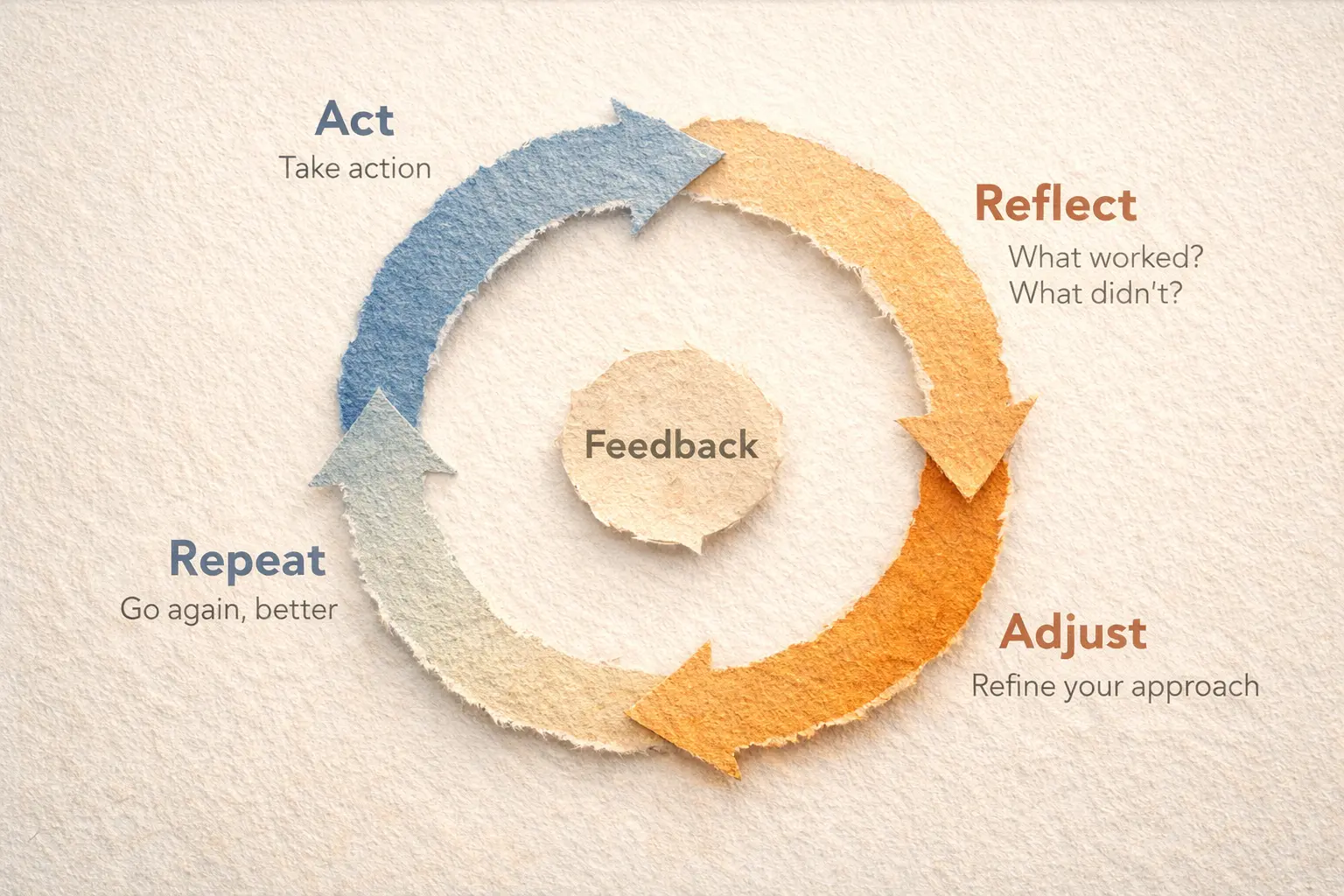
In coaching, feedback is not a one-off event. It’s a continuous loop:
- Act
- Reflect
- Adjust
- Repeat
That loop is where performance is built.
Why Feedback Is Critical for High Performance
High performance doesn’t happen by accident. It’s the result of tight feedback loops and deliberate adjustment.
1. Feedback Accelerates Learning
Research consistently shows that feedback is essential for developing competence and progressing toward mastery. In education and coaching contexts, it is described as central to development, progression, and achievement.
Put simply:
- No feedback = guesswork
- Clear feedback = faster improvement
It gives people a “mirror” they cannot create on their own.
2. Feedback Drives Behaviour Change
Feedback works because it increases awareness, and awareness is the starting point of change.
But awareness alone isn’t enough. For feedback to improve performance, people must:
- Be open to it
- Believe change is possible
- Take action
When those conditions are met, feedback becomes a direct driver of behaviour change and performance improvement.
3. Feedback Creates Perspective
One of the biggest limitations in performance is self-perception.
We all have blind spots. We all overestimate some strengths and underestimate others.
Feedback provides:
- External perspective
- Reality checks
- New ways of seeing situations
That’s why approaches like 360-degree feedback can improve performance over time, because they expose individuals to multiple viewpoints, not just their own.
4. Feedback Enables Continuous Adaptation
In fast-moving environments, static performance is a liability.
Feedback allows individuals to:
- Adjust quickly
- Refine strategies
- Stay aligned with goals
Without it, people keep repeating the same behaviours, whether they work or not.
The Hard Truth: Why People Avoid Feedback
If feedback is so powerful, why do people resist it?
Because it’s uncomfortable.
1. Feedback Triggers Threat Responses
Psychologically, feedback can feel like a threat to identity:
- “I’m not as good as I thought”
- “I’ve got this wrong”
- “Others see me differently”
This often leads to defensiveness, denial, or avoidance. Research shows feedback frequently triggers fear, defensiveness, or discomfort, even when it’s intended to help.
2. We Associate Feedback with Criticism
Many people equate feedback with:
- Being judged
- Being criticised
- Being told they’re wrong
So they avoid it altogether or only seek positive feedback.
There’s also evidence that people anticipate feedback as anxiety-inducing, which leads them to disengage before it even happens.
3. Receptivity Is the Missing Piece
Here’s the key point:
Feedback only works if the person receiving it is open to it.
Research highlights that feedback often fails not because it’s wrong but because recipients:
- Aren’t ready to hear it
- Don’t trust it
- Don’t know how to act on it
That’s why two people can receive the same feedback:
- One improves dramatically
- The other ignores it
The Coaching Edge: Turning Discomfort Into Growth
This is where coaching makes the difference.
Great coaches don’t just give feedback. They:
- Create psychological safety
- Normalise discomfort
- Help clients process and act on what they hear
Because the goal isn’t to eliminate discomfort.
It’s to make it productive.
Discomfort is often a signal that:
- Something important is being challenged
- A blind spot is being exposed
- Growth is about to happen
Avoiding feedback avoids that growth.
The Uncomfortable Secret to Getting Better, Faster
If you strip high performance back to its fundamentals, it comes down to this:
The people who improve fastest are the ones who engage most honestly with feedback.
Not the ones who get the most praise.
Not the ones who feel the most confident.
The ones who are willing to hear what’s true, even when it stings, and do something about it.
That’s the real work of coaching.
FAQs About Feedback in High-Performance Coaching
1. What is feedback in coaching, really?
Feedback is information that helps you adjust and improve your performance, behaviour, or thinking. It’s not judgement. It’s a tool to close the gap between where you are and where you want to be.
2. Why is feedback so important for high performance?
Because it accelerates learning, drives behaviour change, and reveals blind spots you can’t see on your own. Without it, you’re guessing. With it, you can refine and improve quickly.
3. Why do people resist feedback if it’s so useful?
Because it can feel uncomfortable and threaten how we see ourselves. Many people associate feedback with criticism, which triggers defensiveness or avoidance.
4. What makes feedback actually work?
Receptivity. You need to be open to hearing it, trust the source, and take action. Without that, even the best feedback falls flat.
Summary: What Is Feedback and Why It’s Critical for High-Performance Coaching
Feedback fuels progress, yet most people avoid it when it matters most. It shines a light on blind spots, sharpens self-awareness, and drives meaningful behaviour change when acted on. High performance isn’t about confidence or praise. It’s about how honestly and consistently you engage with feedback. Embrace it, act on it, and you accelerate growth faster than those who don’t.

Trayton Vance
Trayton Vance is the Founder and Managing Director of Coaching Focus Group, one of the UK’s leading leadership coaching consultancies working with clients such as McDonalds, Beats by Dre, Paramount and many more.
Coaching Focus Group
Specialists in leadership coaching, workplace coaching programmes, and building coaching cultures that stick.



You might be interested in...


Employee Engagement Series


