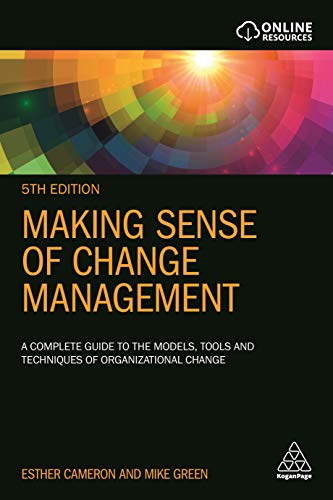
Making Sense of Change Management - Esther Cameron and Mike Green

Introduction
In an era where change is the only constant, understanding the nuances of change management is more critical than ever for leaders and managers across all sectors. "Making Sense of Change Management" by Esther Cameron and Mike Green is a comprehensive guide. Now, in its multiple editions, this book offers a deep dive into the processes, tools, and theories essential for managing change effectively. This article reviews the critical aspects of the book, highlighting its applicability and value in the contemporary business landscape.
Overview
"Making Sense of Change Management" is structured to cover a broad spectrum of concepts surrounding change management. It is divided into four parts, each focusing on different dimensions of change management: individual change, team change, organisational change, and leading change. Each section builds upon the previous, creating a layered understanding of how change can be effectively managed at every level of an organisation.
Key Concepts and Theories
One of the book's strengths is its comprehensive exploration of various theories and models related to change management. Cameron and Green meticulously discuss classical theories, including Kurt Lewin's Change Model and the McKinsey 7-S Framework, while incorporating contemporary approaches and ideas. This blend of old and new makes the book a valuable resource for seasoned practitioners and newcomers to change management.
Practical Applications
Apart from theoretical insights, Cameron and Green provide numerous case studies and real-world examples illustrating the practical application of the theories discussed. This functional component is crucial for readers to apply what they learn in real-life scenarios. The authors present scenarios ranging from corporate mergers and technological upgrades to cultural shifts within organisations, offering readers a holistic view of how different strategies can be deployed in various situations.
Tools for Practitioners
"Making Sense of Change Management" is also a practical handbook that offers tools and techniques for dealing with different aspects of change. These tools include stakeholder analysis, communication strategies, and resistance management techniques. Such resources are invaluable for managers who need to apply theoretical knowledge in practical, impactful ways.
Audience Reception and Critique
The reception of "Making Sense of Change Management" has generally been positive, with many readers appreciating the accessible way in which complex concepts are explained. However, some critics argue that the book could delve deeper into the digital aspects of change management, particularly in light of the increasing importance of technology in organisational change initiatives.
Conclusion
In conclusion, "Making Sense of Change Management" by Esther Cameron and Mike Green is a must-read for anyone involved in organisational change. Whether you are a project manager, a business leader, or a consultant, this book offers valuable insights and tools to help you navigate the complexities of change in any organisation. Its balanced approach to theory and practice makes it a standout resource, capable of equipping professionals with the skills to lead successful change initiatives.
As change continues to be an omnipresent aspect of organisational life, having a resource like "Making Sense of Change Management" can make the difference between leading successful transformations and falling behind in an ever-evolving business environment.
What makes this book stand out in change management?
It covers the full range of change models and approaches — individual, team, and organisational — making it one of the most comprehensive change management textbooks available.
Does it cover psychological aspects of change?
Yes — it explores how individuals and teams experience change emotionally, drawing on psychological models to explain resistance and adaptation.
Who is this book for?
Students, HR professionals, leaders, and coaches who need a thorough understanding of change management theory and practice.
Is it purely theoretical?
No — it balances theory with practical frameworks, case studies, and tools for implementing change in real organisations.