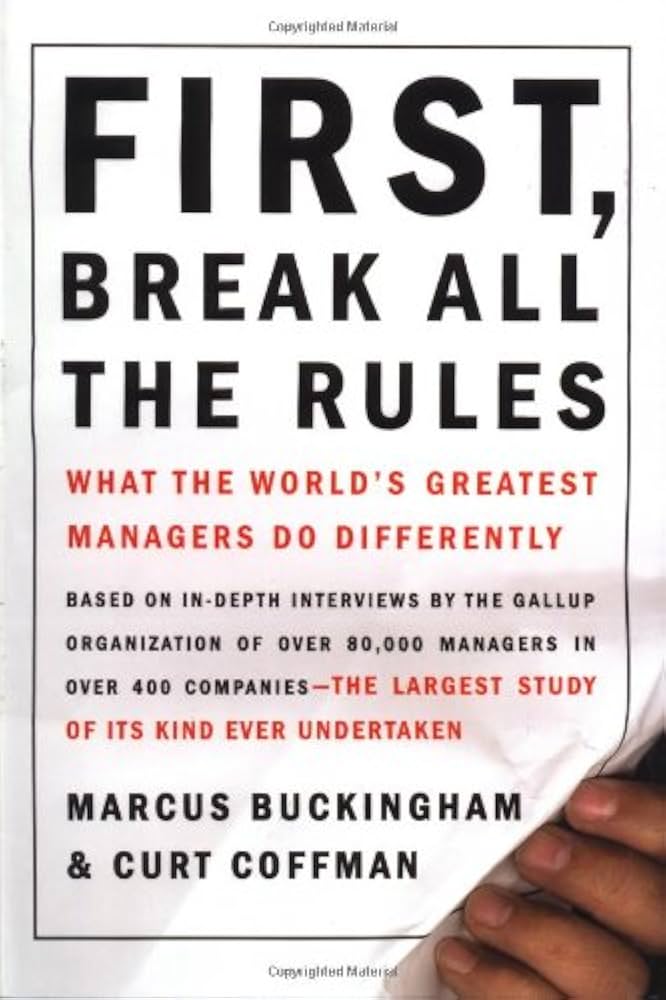
First Break All the Rules - Marcus Buckingham and Curt Coffman

Introduction
"First Break All the Rules: What the World's Greatest Managers Do Differently" is a pivotal management book that has shaped the modern approach to leadership and management. Written by Marcus Buckingham and Curt Coffman, who were researchers at Gallup at the time, the book presents findings from extensive interviews with over 80,000 managers across different industries. The book's core message is a radical departure from traditional management practices, urging leaders to focus on strengths rather than weaknesses and to challenge conventional wisdom.
Key Themes and Concepts
The book is structured around critical findings distinguishing great managers from average managers. Some of the fundamental principles discussed include:
- Select for Talent—Not Simply Experience or Determination: Buckingham and Coffman argue that great managers know how to identify and leverage their team members' innate talents. Instead of trying to fix weaknesses, they focus on enhancing strengths.
- Define the Right Outcomes, Then Let Each Person Find Their Path: Instead of micromanaging how tasks should be accomplished, exceptional managers set clear expectations regarding the outcome and then give employees the freedom to achieve these results in the way they find best.
- Focus on Strengths: One of the most influential ideas in the book is the emphasis on strengths. The authors suggest that the best managers help their employees develop their most extraordinary talents, creating roles where they can excel.
- Find the Right Fit: Instead of promoting someone to their level of incompetence (as per the Peter Principle), great managers find the best fit for their employees' talents within the organisation.
Impact on Management Practices
The ideas presented in "First Break All the Rules" have profoundly influenced contemporary management practices. Many organisations have shifted towards a strengths-based approach, rethinking how they recruit, train, and develop their staff. The book has also helped managers understand the importance of individualisation in leadership, acknowledging that each employee has unique needs and motivations.
Criticisms and Limitations
While widely appreciated, the book has faced criticism for its somewhat anecdotal evidence and the practical difficulties in implementing its recommendations across diverse organisational cultures. Critics argue that the strengths-based approach might overlook the need to address critical weaknesses that hamper performance.
Conclusion
"First, Break All the Rules" is more than just a management book; it is a manifesto for a new era of leadership that emphasises individual strengths and personal growth. As organisations adapt to rapid changes in the business environment, Buckingham and Coffman's insights remain relevant, offering valuable strategies for developing effective managers and motivated teams.
This book is a must-read for those aspiring to understand the essence of excellent management and how to cultivate an environment where employees and businesses can thrive simultaneously.
What is the main insight of First, Break All the Rules?
Based on Gallup research with 80,000 managers, great managers focus on strengths rather than fixing weaknesses, and give employees freedom to find their own path to results.
What is the 'Select for Talent' principle?
Great managers prioritise innate talent over experience or determination when hiring — because talent can't be taught, but skills can.
How does this book challenge traditional management?
It argues against moulding everyone the same way. Instead, it champions finding the right fit for each person's unique talents within the organisation.
What is the Q12?
Gallup's 12-question employee engagement survey derived from this book's research — widely used to measure whether workplaces bring out the best in their people.