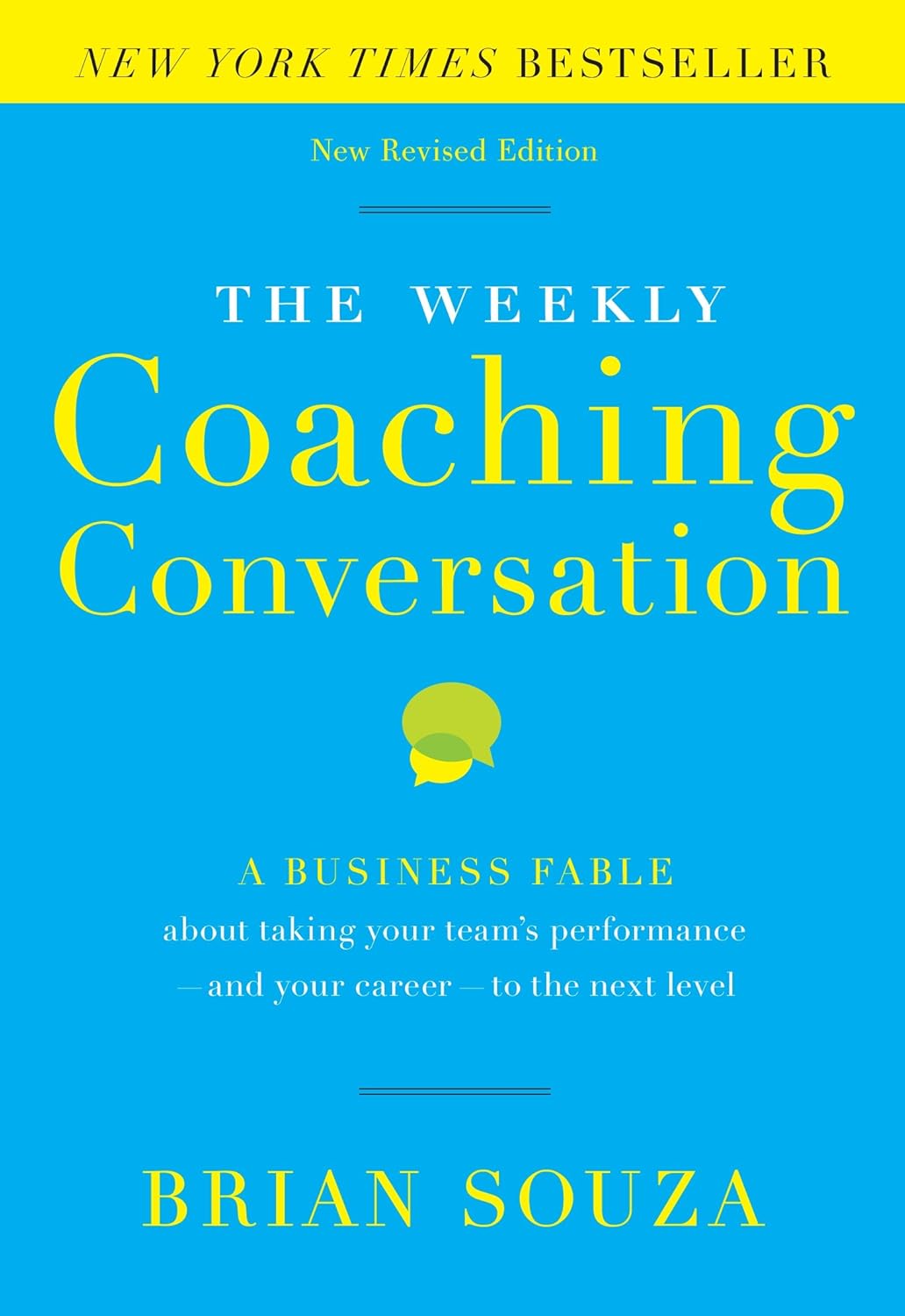
The Weekly Coaching Conversation: A Business Fable About Taking Your Team's Performance and Your Career to the Next Level
Overview
Great leadership is rarely about one big conversation.
It is about the small conversations that happen consistently.
The Weekly Coaching Conversation: A Business Fable About Taking Your Team's Performance and Your Career to the Next Level by Brian Souza takes a refreshing approach to leadership development by blending storytelling with practical coaching principles. Rather than presenting a traditional management handbook, Souza uses a business fable to demonstrate how regular coaching conversations can transform team performance, employee engagement, and leadership effectiveness.
The central message is simple yet powerful. Souza argues that coaching should not be reserved for annual appraisals or when performance drops. Instead, leaders should build coaching into their weekly routine, creating frequent, meaningful conversations that develop people, solve problems early, and strengthen relationships.
For leadership coaches, this book offers a compelling case for shifting organisations from a culture of managing performance to one of developing people.
Key Concepts
Coaching Is a Habit, Not an Event
One of the book's biggest lessons is that coaching works best when it becomes part of everyday leadership.
Too many managers only have meaningful conversations when:
- Something goes wrong
- Performance declines
- A formal review is due
- An employee raises a concern
The authors argue that weekly coaching conversations create a rhythm that keeps communication open and development continuous.
Small conversations, held consistently, often prevent bigger problems from emerging.
Consistency Builds Trust
Trust is not built through occasional motivational speeches.
It grows through regular, genuine conversations.
Weekly coaching creates opportunities for leaders to:
- Listen more actively
- Understand challenges early
- Recognise achievements
- Offer support
- Encourage growth
When employees know these conversations will happen regularly, they are more likely to speak openly and raise issues before they escalate.
Coaching Improves Performance
The book challenges the idea that coaching is simply about being supportive.
Effective coaching also drives accountability.
Regular conversations help employees:
- Clarify priorities
- Solve problems
- Stay focused on goals
- Take ownership
- Improve performance over time
Rather than waiting for annual feedback, employees receive continuous guidance that helps them succeed.
Leaders Should Ask More Than They Tell
A recurring theme throughout the story is the importance of asking thoughtful questions instead of providing immediate answers.
Leaders often feel pressure to solve every problem.
Coaching leaders resist that temptation.
Instead, they encourage team members to think critically, explore options, and develop their own solutions.
This builds confidence, capability, and independence.
Great Conversations Strengthen Culture
The book makes it clear that coaching conversations are about more than individual performance.
Over time they help create:
- Stronger relationships
- Greater engagement
- Higher accountability
- Better collaboration
- More resilient teams
Culture is shaped one conversation at a time.
Why the Business Fable Format Works
Unlike many leadership books packed with theory, this book uses storytelling to make its lessons memorable.
Readers follow characters facing familiar workplace challenges, making it easier to see how coaching principles apply in real situations.
The narrative keeps the book engaging while naturally introducing practical leadership lessons.
For busy managers, this makes the content both accessible and relatable.
How Leaders Can Apply the Book
Schedule Weekly Coaching Conversations
The biggest takeaway is also the simplest.
Protect time every week for a coaching conversation with each direct report.
These conversations do not need to be lengthy.
Even 20 to 30 minutes of focused discussion can strengthen relationships and improve performance.
Ask Better Questions
Instead of leading every discussion with updates and instructions, leaders can ask:
- What's going well?
- What's your biggest challenge this week?
- What support do you need?
- What have you learned recently?
- What's your next priority?
These questions encourage reflection and ownership.
Listen More Than You Speak
Coaching conversations are not another team briefing.
Leaders should spend more time listening than talking.
Employees often discover their own solutions when given the space to think aloud.
Focus on Development, Not Just Tasks
Weekly conversations should include more than project updates.
Explore topics such as:
- Career aspirations
- Skills development
- Confidence
- Relationships
- Long term goals
Development should become part of everyday leadership, not an annual event.
How Leadership Coaches Can Apply This Book
1. Help Leaders Build Coaching Habits
Many leaders understand coaching in theory but struggle to make it a consistent practice.
This book reinforces the value of creating regular coaching routines rather than relying on occasional interventions.
Coaches can help clients establish weekly coaching habits that become part of their leadership style.
2. Shift From Performance Management to Performance Development
The book supports an important mindset shift.
Performance conversations should not simply evaluate results.
They should develop capability.
Leadership coaches can use this principle to help managers become better developers of people rather than reviewers of performance.
3. Encourage Better Listening
Many leaders unintentionally dominate conversations.
This book reminds us that coaching starts with listening.
Coaches can challenge leaders to notice:
- How much they speak
- How quickly they offer advice
- Whether they allow silence
- Whether employees leave with greater clarity or simply more instructions
4. Develop Coaching Cultures
The principles extend beyond individual leaders.
Organisations can use weekly coaching conversations to embed coaching into everyday management.
Leadership coaches working with organisations may find the book useful when introducing coaching culture initiatives.
5. Reinforce Accountability
Weekly conversations create natural accountability.
Rather than checking progress every few months, leaders can explore:
- What commitments were made?
- What progress has been achieved?
- What obstacles remain?
- What support is needed?
This keeps momentum high without becoming overly controlling.
Strengths of the Book
Easy to Read
The business fable format makes leadership concepts engaging and memorable.
Highly Practical
The ideas can be implemented immediately through simple changes to leadership routines.
Relevant for Everyday Managers
The examples reflect common workplace challenges rather than unusual scenarios.
Strong Coaching Focus
The emphasis on curiosity, listening, development, and accountability aligns closely with coaching best practice.
Encourages Sustainable Behaviour Change
Rather than promoting dramatic leadership transformations, the book shows how small, consistent habits create lasting results.
Potential Limitations
Readers looking for detailed coaching models or advanced coaching frameworks may find the book relatively light on theory.
Its strength lies in demonstrating why regular coaching conversations matter rather than providing an in depth coaching methodology.
Experienced executive coaches may already be familiar with many of the underlying principles.
However, the storytelling approach makes the concepts highly accessible for leaders who are newer to coaching.
Key Takeaways for Leadership Coaches
This book reinforces several important coaching principles:
- Coaching should happen regularly, not occasionally.
- Consistency builds trust.
- Great leaders ask more questions than they answer.
- Listening is one of the most powerful leadership skills.
- Small conversations create lasting change.
- Coaching develops people, not just performance.
Perhaps the most valuable insight is that leadership transformation rarely comes from one breakthrough conversation.
It comes from showing up every week with curiosity, consistency, and a genuine commitment to helping people grow.
Final Verdict
The Weekly Coaching Conversation is an engaging and practical read that demonstrates how consistent coaching conversations can transform leadership, strengthen relationships, and improve team performance.
For leadership coaches, people managers, and organisations looking to build a coaching culture, it provides a compelling reminder that the most effective leaders are not those who have all the answers. They are the ones who create the space for others to find their own.
1. Who should read The Weekly Coaching Conversation?
This book is ideal for managers, team leaders, leadership coaches, HR professionals, and anyone who wants to develop a coaching style of leadership.
2. What is the main message of the book?
The book shows that regular coaching conversations build trust, improve performance, and help people grow more effectively than occasional formal reviews.
3. Is this book practical?
Yes. It focuses on simple coaching habits that leaders can start using immediately during their weekly one to one meetings.
4. Do I need coaching experience to benefit from this book?
No. The ideas are straightforward and suitable for both new and experienced leaders.
5. How can leadership coaches use this book?
Coaches can use it to help leaders build coaching habits, improve listening skills, ask better questions, and create stronger coaching cultures within their organisations.
6. Is this book worth reading for experienced leaders?
Yes. While the concepts are simple, the reminder to coach consistently rather than occasionally is valuable for leaders at every level.