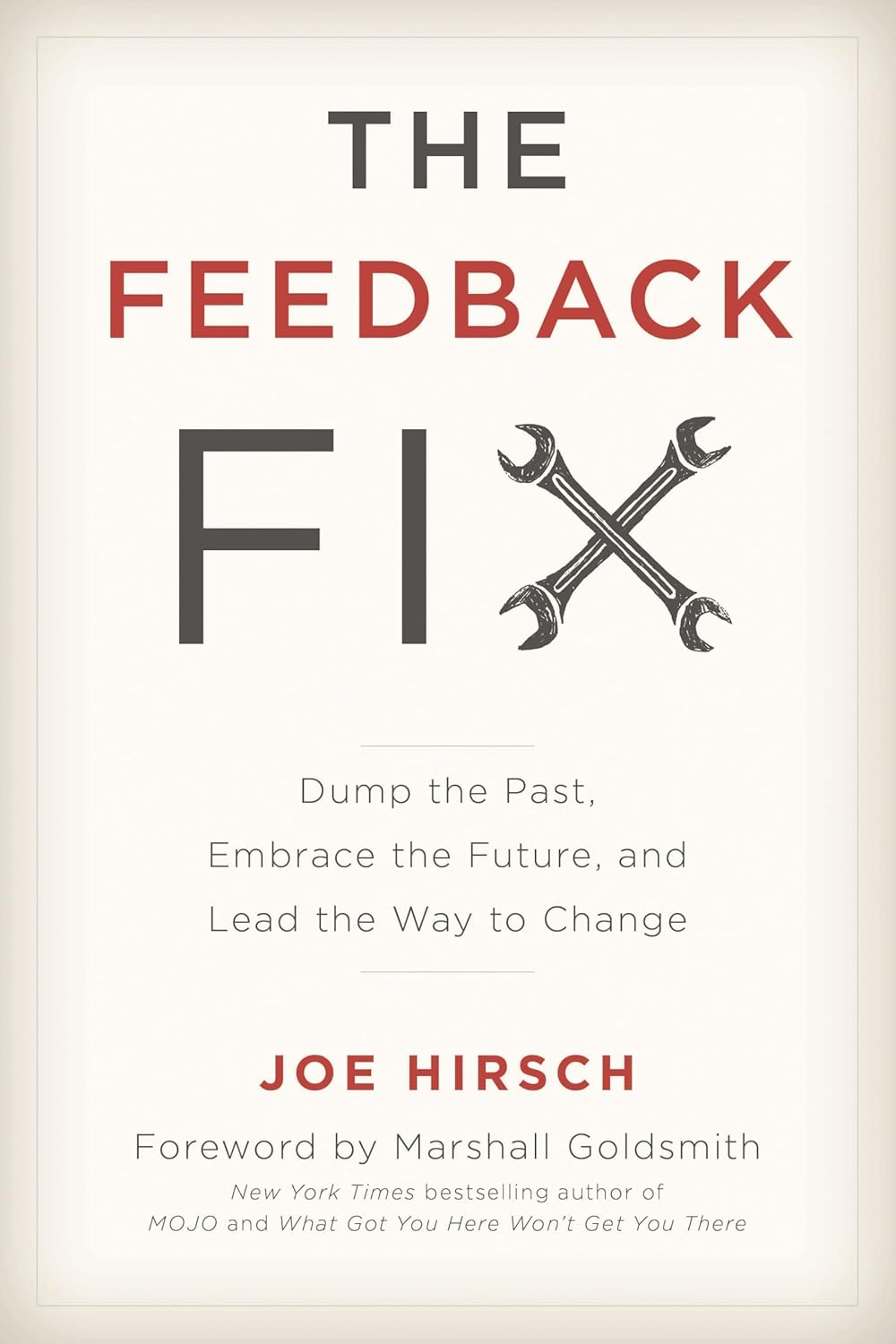
The Feedback Fix: Dump the Past, Embrace the Future, and Lead the Way to Change
Overview
Most feedback conversations begin by looking backwards.
What went wrong?
What could have been done differently?
What mistakes need fixing?
Joe Hirsch challenges this approach in The Feedback Fix, arguing that traditional feedback often keeps people trapped in the past. Instead of dwelling on what cannot be changed, Hirsch introduces a more effective alternative: future-focused conversations that help people improve what comes next.
Drawing on behavioural science, psychology and practical leadership experience, Hirsch presents a coaching-friendly approach that shifts conversations from judgement to growth. Rather than criticising past performance, leaders learn how to inspire future success.
For leadership coaches and managers, this book provides a practical roadmap for replacing feedback with conversations that build confidence, ownership and lasting improvement.
Key Concepts
Feedback Looks Back. Feedforward Looks Ahead
The central idea running throughout the book is simple.
Feedback analyses the past.
Feedforward improves the future.
While traditional feedback often focuses on errors, Hirsch encourages leaders to ask:
- What could you try next time?
- What would success look like?
- What's one change that could make the biggest difference?
By shifting attention towards future possibilities, conversations become more constructive, optimistic and motivating.
Growth Happens Through Better Conversations
The book argues that development is less about evaluating performance and more about creating meaningful dialogue.
Instead of delivering a verdict, leaders should become thinking partners.
Future-focused conversations help people:
- Explore possibilities
- Generate solutions
- Build confidence
- Take ownership
- Commit to action
The conversation becomes collaborative rather than corrective.
Coaching Creates Ownership
One of the strongest coaching themes in the book is personal ownership.
People rarely change because someone tells them what they did wrong.
They change because they discover better ways of moving forward.
Hirsch encourages leaders to ask questions that help individuals create their own improvement plans rather than prescribing solutions.
This mirrors one of coaching's core principles:
People support what they help create.
Separate the Person from the Performance
Traditional feedback can easily feel personal.
Even well-intentioned comments can trigger defensiveness.
The Feedback Fix encourages leaders to remove judgement from the conversation and instead focus on possibilities, behaviours and future actions.
This creates psychological safety and allows people to stay open to learning.
The Future Is More Motivating Than the Past
Hirsch highlights an important psychological principle.
People cannot change yesterday.
They can influence tomorrow.
Future-focused conversations naturally generate greater optimism because they centre on progress instead of regret.
Rather than asking:
"Why did this happen?"
Leaders ask:
"What would you like to do differently next time?"
The shift is subtle.
The impact is significant.
Why the Book Works
Unlike many books on performance management, The Feedback Fix doesn't simply recommend delivering feedback more skilfully.
It questions whether traditional feedback is the right starting point at all.
The writing is approachable, supported by research and packed with practical examples that leaders can immediately apply in one-to-one conversations.
The ideas feel highly relevant to modern coaching-led leadership, where curiosity, trust and development matter more than judgement.
How Leaders Can Apply the Book
Shift Every Feedback Conversation Forward
Instead of spending most of the conversation analysing mistakes, spend more time exploring future actions.
Ask:
- What have you learned?
- What will you do differently?
- What support would help?
- What's your next step?
People leave with clarity instead of criticism.
Replace Advice with Questions
Rather than solving every problem yourself, invite others to think.
Questions such as:
- What options have you considered?
- What would success look like?
- What's one thing you could try this week?
build confidence far more effectively than immediate advice.
Make Development Continuous
Feedforward should not be reserved for performance reviews.
The book encourages leaders to make these conversations part of everyday leadership.
Short, regular coaching conversations create far greater momentum than occasional formal reviews.
Focus on Possibility
Great coaching conversations help people imagine a better future.
Leaders can deliberately shift conversations towards:
- Opportunities
- Learning
- Growth
- Improvement
- Next actions
rather than replaying previous mistakes.
How Leadership Coaches Can Apply This Book
1. Help Leaders Move Beyond Feedback
Many organisations still rely heavily on feedback conversations.
Leadership coaches can introduce feedforward as a more empowering alternative that encourages action instead of defensiveness.
2. Develop Future Focused Leaders
The book reinforces an important coaching habit.
Great leaders spend less time analysing failure and more time helping people build success.
Coaches can help leaders develop this mindset in everyday conversations.
3. Encourage Coaching Questions
The Feedback Fix reinforces the value of asking thoughtful questions before offering solutions.
Leadership coaches can challenge clients to notice:
- How quickly they give advice
- Whether conversations focus on blame or possibility
- How often employees leave with their own action plan
4. Build Coaching Cultures
Feedforward fits naturally within coaching cultures.
Organisations that encourage future-focused conversations create environments where learning feels safer, more collaborative and more continuous.
5. Strengthen Psychological Safety
Because feedforward removes much of the judgement associated with traditional feedback, it encourages more open conversations.
Leadership coaches can use these principles to help teams become more willing to learn, experiment and improve.
Strengths of the Book
Highly Practical
The ideas are immediately applicable to leadership, coaching and performance conversations.
Research Backed
Hirsch combines behavioural science with practical leadership experience in an accessible way.
Perfect for Modern Leaders
The book aligns naturally with coaching-led leadership and employee development.
Coaching Friendly
Its emphasis on curiosity, ownership and future thinking closely reflects professional coaching principles.
Encourages Positive Behaviour Change
Rather than dwelling on mistakes, the book helps leaders create conversations that inspire improvement.
Potential Limitations
Readers looking for detailed coaching models or formal coaching frameworks may find the book relatively light on process.
Its strength lies in changing the way leaders think about development conversations rather than providing a comprehensive coaching methodology.
Those already familiar with Marshall Goldsmith's work on feedforward will recognise many of the underlying principles, although Hirsch expands them into a broader communication framework with fresh research and practical application.
Final Verdict
The Feedback Fix is an insightful, practical and highly relevant read for today's leaders.
Joe Hirsch challenges one of leadership's longest-standing assumptions by showing that development conversations become far more effective when they focus on future possibilities instead of past mistakes.
For leadership coaches, managers and organisations seeking to build a stronger coaching culture, this book offers a compelling framework for replacing judgement with curiosity and feedback with feedforward.
Frequently Asked Questions
1. Who should read The Feedback Fix?
This book is ideal for managers, leadership coaches, HR professionals and anyone who wants to improve performance conversations.
2. What is the main message of the book?
The book argues that future-focused feedforward conversations are often more effective than traditional feedback because they inspire action rather than defensiveness.
3. Is this book practical?
Yes. It provides simple, research-backed techniques that leaders can apply immediately in everyday coaching conversations.
4. Do I need coaching experience to benefit from this book?
No. The ideas are accessible and suitable for both new and experienced leaders.
5. How can leadership coaches use this book?
Coaches can use it to help leaders ask better questions, create future-focused development conversations and build coaching cultures that encourage growth.
6. Is this book worth reading if I'm already familiar with feedforward?
Yes. While it builds on many of the same principles, Hirsch expands the concept with behavioural science, practical leadership examples and a comprehensive framework for modern workplace conversations.

Key Takeaways for Leadership Coaches
This book reinforces several important coaching principles:
- Future-focused conversations create greater motivation.
- Coaching is more effective than criticism.
- Questions develop people better than judgement.
- Ownership drives lasting behaviour change.
- Psychological safety improves learning.
- Great leaders focus on what's possible next, not what went wrong before.
Perhaps the book's greatest insight is that people rarely need a better explanation of yesterday.
They need a better conversation about tomorrow.