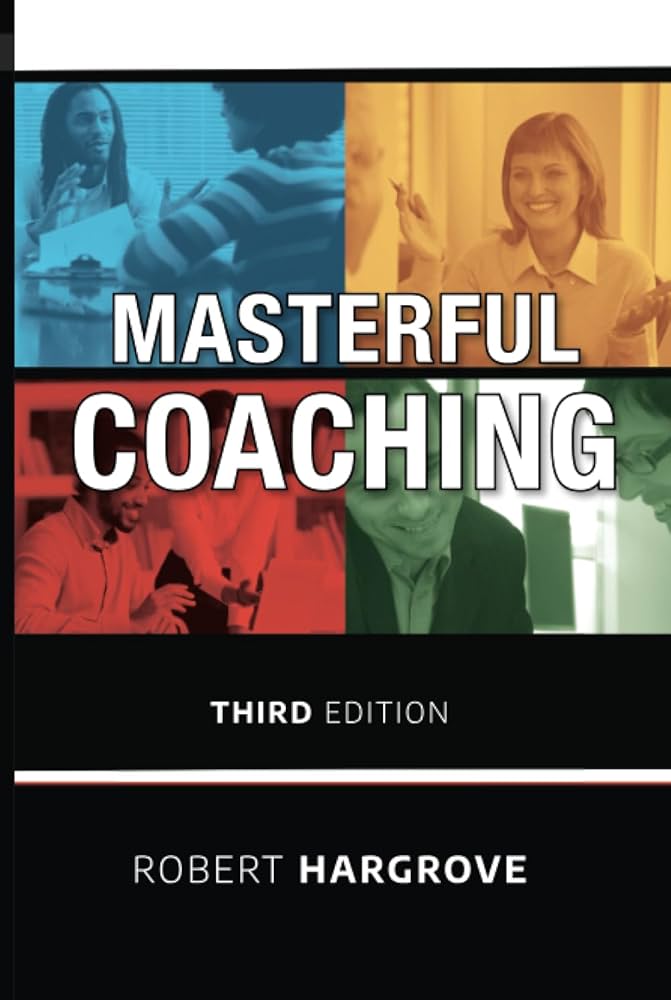
Masterful Coaching - Robert Hargrove

Introduction
In professional development and leadership training, Robert Hargrove's "Masterful Coaching" stands out as a seminal work. It guides managers and leaders in fostering individual potential while aiming for extraordinary results in their organisations. This article explores the core principles, methodologies, and impact of Hargrove's approach, as delineated in his book.
Overview of "Masterful Coaching"
Published in 1995, "Masterful Coaching" has undergone several updates, each refining and expanding upon the ideas of effective leadership coaching. Hargrove posits that the role of a coach is not merely to instruct but to transform, enabling leaders to unlock their inherent potential and drive significant outcomes for themselves and their teams.
Core Principles
Hargrove introduces several vital principles that form the backbone of his coaching philosophy:
- Transformational Leadership: Hargrove emphasises that effective coaching transforms leaders from command-and-control figures into facilitators who inspire self-motivation and innovation among team members.
- The Partnership Approach: Coaching is framed as a collaborative process in which the coach and coachee are partners working towards a common goal. This partnership is built on trust, mutual respect, and a shared vision.
- Unleashing Creativity and Innovation: Hargrove believes a coach should help leaders see beyond conventional strategies and foster a culture of creativity and innovation.
- Commitment to Extraordinary Results: According to Hargrove, the ultimate goal of coaching is not just to improve but to achieve results that go far beyond the norm or what was previously thought possible.
Methodologies
"Masterful Coaching" provides a variety of methodologies and tools that coaches can use to implement Hargrove’s principles effectively:
- Reflective Inquiry: Coaches are encouraged to ask powerful questions that prompt leaders to reflect deeply on their beliefs, strategies, and the impact of their actions.
- Goal Setting: Strategic goal setting is crucial. Goals should be challenging yet achievable, designed to push the organisation towards remarkable achievements.
- Feedback and Assessment: Regular feedback and rigorous assessments are crucial for measuring progress and recalibrating strategies as necessary.
Impact on Leadership Development
The impact of Hargrove's coaching methodology can be seen in various spheres of leadership development:
- Enhanced Self-Awareness: Leaders become more aware of their strengths and areas for improvement, fostering personal growth.
- Improved Team Dynamics: Team dynamics and productivity increase as leaders learn to empower employees rather than micromanage.
- Sustainable Change: Hargrove’s approach promotes long-term sustainable changes, embedding new skills and mindsets within the organisational culture.
Conclusion
Robert Hargrove's "Masterful Coaching" has become an indispensable resource in leadership coaching. Its emphasis on transformational change and achieving extraordinary results resonates with modern leaders and coaches.
As businesses face ever more complex challenges and opportunities, the principles laid out by Hargrove will undoubtedly remain relevant, guiding new generations of leaders towards effective and impactful coaching relationships.