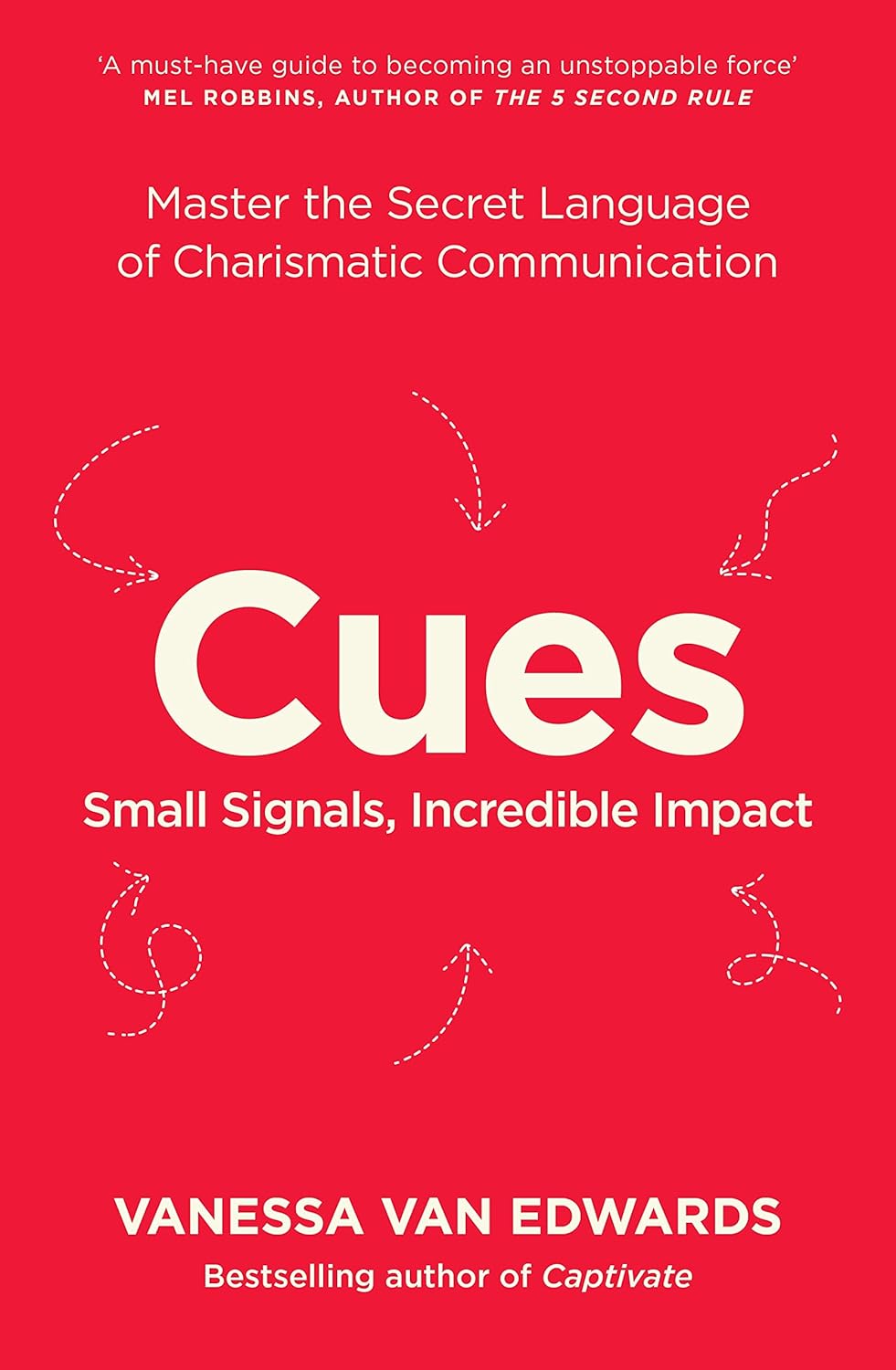
Cues: Master the Secret Language of Charismatic Communication
Overview
Leadership is often judged by what we say.
In reality, it is just as influenced by how we say it.
In Cues: Master the Secret Language of Charismatic Communication, Vanessa Van Edwards explores the science behind human behaviour, revealing how verbal and non verbal cues shape trust, influence, connection, and credibility. Drawing on behavioural research and real world examples, she explains how people constantly send and receive signals, often without realising it.
Rather than focusing solely on communication techniques, Van Edwards encourages readers to become more intentional about the cues they project and more observant of the cues others display.
For leaders, this awareness can transform everyday conversations.
For leadership coaches, it offers practical insights into how communication either strengthens or weakens coaching relationships.
More importantly, the book highlights why communication is the foundation of a COACHING-LED ORGANISATION. Every interaction between leaders, managers, and teams either reinforces a coaching approach or undermines it.
Key Concepts
Every Interaction Sends a Signal
One of the book's central messages is that people are constantly communicating, even when they are not speaking.
Facial expressions.
Tone of voice.
Posture.
Eye contact.
Timing.
Word choice.
All of these cues influence how messages are interpreted.
Leaders who understand this recognise that trust is built long before difficult conversations or coaching sessions begin.
Warmth and Competence Build Trust
Van Edwards explains that people instinctively assess two qualities when meeting someone:
- Warmth
- Competence
Leaders who demonstrate both are more likely to inspire confidence while creating psychological safety.
This balance is particularly important in coaching conversations.
Too much authority can feel intimidating.
Too much warmth without direction can reduce accountability.
The most effective coaching leaders communicate both empathy and confidence.
Listening Goes Beyond Words
The book encourages readers to become skilled observers.
People often communicate uncertainty, hesitation, frustration, or enthusiasm through subtle behavioural cues before they express them verbally.
For coaches and leaders, noticing these signals allows conversations to become more meaningful.
Instead of simply hearing answers, they begin understanding what sits behind them.
Communication Shapes Relationships
Strong relationships are not built through occasional motivational speeches.
They are built through consistent interactions that demonstrate respect, curiosity, and genuine interest.
Every conversation either deposits or withdraws from the trust account.
Van Edwards reminds us that leadership communication is never neutral.
It is always influencing how others feel.
Small Changes Create Big Impact
One of the strengths of Cues is its focus on practical improvements rather than dramatic personality changes.
Simple adjustments such as maintaining eye contact, matching energy appropriately, pausing before responding, or using open body language can significantly improve communication.
These behaviours become especially valuable during coaching conversations where trust and openness are essential.
Why This Matters for a COACHING-LED ORGANISATION
Many organisations aspire to create a coaching culture.
That is an excellent starting point.
A COACHING-LED ORGANISATION goes further.
It embeds coaching into every interaction, every decision, and every level of leadership.
This requires more than teaching managers how to ask powerful questions.
It requires leaders who consistently communicate in ways that encourage curiosity, trust, learning, and shared ownership.
This is where Cues becomes particularly valuable.
Van Edwards demonstrates that coaching is not only about the questions we ask.
It is about the signals we send while asking them.
If a leader asks an open question with an impatient tone, crossed arms, or distracted attention, the coaching moment is weakened.
If the same question is delivered with genuine curiosity, active listening, and openness, it creates psychological safety and encourages honest dialogue.
A COACHING-LED ORGANISATION depends on thousands of these interactions happening well every day.
How Leaders Can Apply the Book
Develop Greater Self Awareness
Leaders should regularly reflect on the cues they project.
Ask yourself:
- Do I appear approachable?
- Do I give people my full attention?
- What does my body language communicate?
- Am I creating curiosity or defensiveness?
Self awareness is the first step towards intentional leadership.
Improve Coaching Conversations
Before focusing on better questions, focus on better presence.
Leaders can:
- Maintain open body language.
- Reduce distractions.
- Listen without interrupting.
- Use silence effectively.
- Match empathy with accountability.
These behaviours strengthen every coaching conversation.
Build Psychological Safety
Employees are more likely to share ideas, concerns, and mistakes when leaders consistently communicate openness and respect.
Small behavioural cues often determine whether people choose to speak up or stay silent.
Become More Observant
Coaching leaders pay attention to what is not being said.
Notice:
- Hesitation before answering.
- Changes in tone.
- Loss of enthusiasm.
- Avoidance behaviours.
- Increased confidence over time.
These observations create opportunities for deeper coaching conversations.
How Leadership Coaches Can Apply This Book
1. Help Leaders Understand Their Communication Style
Many leaders are unaware of the signals they send.
Leadership coaches can help clients explore:
- Their communication habits.
- Their emotional presence.
- Their listening behaviours.
- The impact they have on others.
Increasing awareness often unlocks immediate improvements.
2. Strengthen Coaching Presence
Great coaching is about more than asking powerful questions.
It is also about creating an environment where people feel genuinely heard.
Leadership coaches can use the concepts in Cues to help leaders become more present, attentive, and intentional during conversations.
3. Improve Feedback Conversations
Feedback is often remembered less for the words used and more for how it was delivered.
The book reinforces the importance of aligning verbal and non verbal communication.
Leaders who communicate with clarity, empathy, and confidence are more likely to encourage positive behavioural change.
4. Support Coaching Led Leadership
Creating a Coaching Led Organisation requires leaders who coach through every interaction.
Leadership coaches can use Van Edwards' principles to help clients:
- Build trust more quickly.
- Strengthen relationships.
- Improve communication.
- Increase influence.
- Create environments where learning becomes part of everyday work.
5. Embed Coaching Into Daily Leadership
The book reminds us that coaching is not a scheduled activity.
It is a leadership behaviour.
Every meeting.
Every conversation.
Every piece of feedback.
Every decision.
Each interaction provides an opportunity to coach.
Strengths of the Book
Backed by Behavioural Science
Van Edwards combines research with practical advice, making the content both credible and accessible.
Highly Practical
Readers can implement many of the techniques immediately without changing their personality.
Relevant Beyond Public Speaking
The principles apply to coaching, leadership, meetings, presentations, negotiations, and everyday workplace conversations.
Strong Alignment With Coaching
Although not written specifically for coaches, many of the concepts enhance coaching presence, listening, trust, and communication.
Potential Limitations
Readers expecting a traditional leadership or coaching book may be surprised by the emphasis on behavioural science and communication research.
Some examples focus on networking, presentations, or first impressions rather than organisational leadership.
However, leadership coaches will find it easy to translate these ideas into coaching and leadership contexts.
Key Takeaways for Leadership Coaches
This book reinforces several important coaching principles:
- Communication is about more than words.
- Trust is built through consistent behavioural cues.
- Coaching presence influences coaching outcomes.
- Great leaders observe as well as listen.
- Psychological safety begins with how leaders show up.
- Every interaction shapes organisational culture.
Perhaps the biggest lesson is this.
Creating a Coaching Led Organisation is not achieved by teaching coaching models alone.
It happens when leaders consistently communicate in ways that build trust, encourage curiosity, and empower others to think for themselves.
That transformation starts with the cues people experience every single day.
Final Verdict
Rating: 4.8/5
Cues is an insightful and practical guide that helps leaders understand the hidden language of communication. While it is not a coaching book in the traditional sense, its lessons are highly relevant for anyone looking to develop coaching leaders and embed coaching into the fabric of an organisation.
For leadership coaches, executive coaches, and organisations committed to becoming COACHING-LED ORGANISATIONS, this book offers a valuable reminder that coaching is not simply about asking better questions.
It is about communicating in ways that consistently create trust, connection, and the confidence for others to grow.
FAQs About Cues Book
1. What is Cues by Vanessa Van Edwards about?
Cues explores how verbal and non verbal signals shape trust, influence, connection and credibility. It helps readers become more aware of the signals they send and the behaviours they notice in others.
2. How does Cues connect to a coaching-led organisation?
A coaching-led organisation depends on leaders who create trust and encourage people to think for themselves. The book shows how everyday communication cues can either strengthen or weaken those coaching moments.
3. Why are warmth and competence important in coaching conversations?
Warmth helps people feel safe and understood. Competence builds confidence in the leader. Together, they create the right balance of empathy, clarity and accountability.
4. Can small communication changes really improve leadership?
Yes. Simple shifts such as maintaining eye contact, removing distractions, pausing before responding and using open body language can make conversations feel more focused, respectful and supportive.

Summary
- Communication is shaped by more than words. Tone, posture, eye contact and timing all influence trust.
- Leaders build stronger relationships when they combine warmth with competence.
- Coaching presence matters. An open question can lose its impact when delivered with impatience or distraction.
- Great leaders listen for what is said and notice the cues that reveal hesitation, confidence or concern.
- Small changes in body language and attention can strengthen coaching conversations immediately.
- A coaching-led organisation is built through everyday interactions that encourage trust, curiosity and shared ownership.